Why Smart Pet Devices Die Just After Warranty: 4 Causes
The short answer: smart pet devices rarely fail at random. A September 2026 teardown of a dead automatic feeder found a 5.5V capacitor reading 1.1V on a 5V board, a margin that clears the warranty and not much more, and the owner priced the part that should have been there at about $0.05. Four causes set the timing of these failures: components sized to the coverage period, boards that are neither protected nor serviceable, replacement parts that are never listed for sale, and software that decides whether a device comes back after an ordinary outage. The checks at the end take ten minutes at a product page and answer most of it before you pay.
I spent this week reading the places where dead devices get opened up: a Petlibro owner’s board-level teardown from September 18, 2026, a 29-comment thread asking whether the company is still worth buying from, and the parts pages that decide whether a failed feeder becomes a repair or a bin liner. The pattern repeats across brands, and it is written into the official documents too: warranty exclusions that name the parts that wear out, help pages that stop at “reset the device”, and parts stores that list every component for one machine and nothing at all for another.
petiqlab earns a commission from the Amazon links on this page. Everything below comes from owner posts, public threads and manufacturer pages read on September 20, 2026, with links in the sources at the end. petiqlab has not tested these devices, and the board measurements quoted here are the owner’s.
Why do smart pet devices fail just after the warranty?
Four causes, in the order they show up in the threads.
- Components are sized to clear the warranty, not to serve the pet. The clearest example is a capacitor rated at 5.5V on a 5V rail. The owner who measured his own feeder found the supercapacitor holding the clock at 1.1V, worked out the intended part costs about $0.05, and wrote that “a $0.05 CR2032 battery holder with a simple isolation diode would last 5-10 years and fail gracefully (resetting the clock when unplugged)”. His summary of the original choice: “Fragile, margin maximising work at best or planned obsolescence at worst. Functionally the result either way as it’ll last just a little bit further than warranties.”
- The control board is unprotected and unserviceable. The second fault in the same teardown is the E:00 error returning after about 60 seconds instead of immediately. His reading is that the board uses capacitive sensing in a box full of grease, fine food dust and humid air, without coating, so the baseline drifts until the controller “give[s] up on calibration and throw[s] the hard-freeze E:00 error”. A conformal coating would settle it, and in his words “cents were apparently saved” in leaving it off. Cleaning the board with 99% isopropyl alcohol restored it, which is how you know the chip was never the problem.
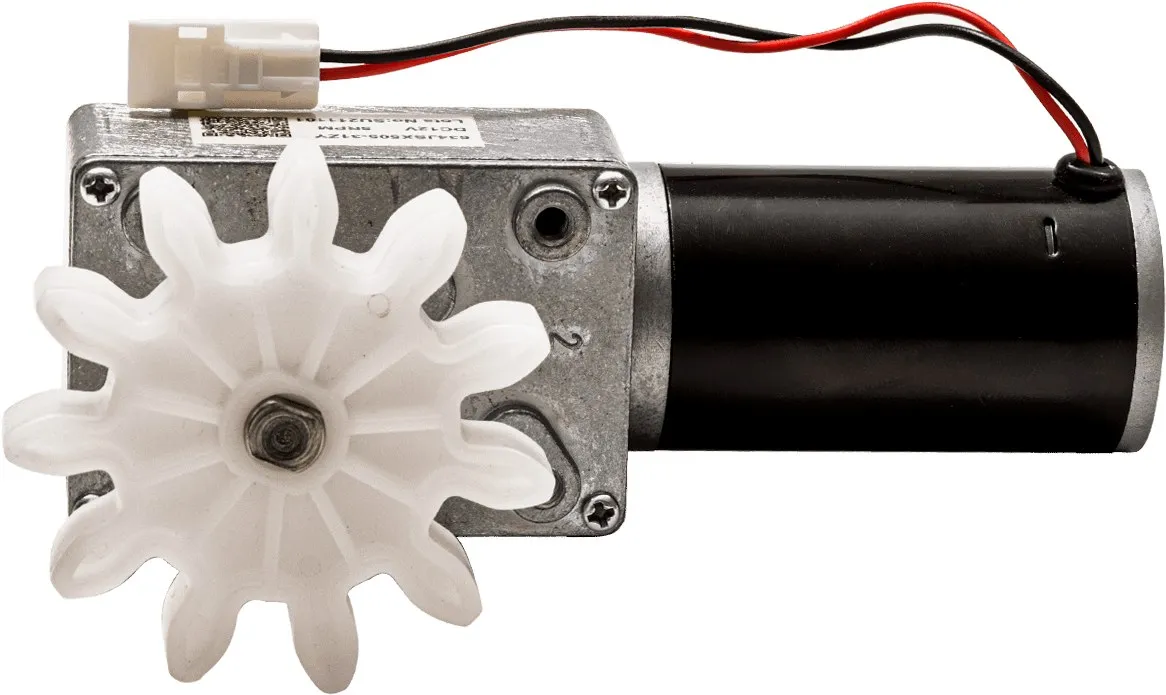
- The part you need is usually not for sale. Petlibro’s own policy names the wear items it will not cover: batteries, feeder rotor, desiccant bags, fountain filters, placemats. Owners go further, reporting accessories that cannot be bought at any price and board-level components that never appear anywhere. Compare the parts page: Whisker publishes a full Litter-Robot 4 list with prices, and PETKIT sells the wireless pump for its fountain as a stand-alone item.
- Software decides the recovery, not the owner. The same device can survive a power cut in one firmware version and fail permanently in the next. A PETKIT owner trying to run his feeder locally through Home Assistant found that “whatever the latest firmware that got pushed blocked all ports”, which ends the discussion. Routers are the other half of it. One Litter-Robot 4 owner wrote that after a reboot of the router “the LR4 stays offline forever” until somebody toggles the WiFi button by hand or cycles the power.
The teardown that priced the year-two wall
The thread is short and technical, and it is the most useful thing I read this week. The owner had a feeder out of warranty, so he opened it and measured the parts that hold the clock and the calibration on a board that talks to a cloud.
Two numbers matter. The first is 1.1V, the reading from a 5.5V 0.47F supercapacitor that should be near its rating when charged. The second is $0.05, what he says the correct substitute costs. Between them sits the argument of this page: a part can be cheap, known to age, and still be chosen because it survives the coverage period.
He did not stop at the capacitor. The E:00 fault that returned 60 seconds after power-up pointed at the sensing layer rather than the power layer, and his conclusion was that a coated board would have avoided the whole class of fault for cents. Read that as the design question you can actually ask as a buyer, because it has a page-level answer: does the vendor list any board-level part for sale, or does the help page end at reset and replace?
The same floor shows up in older evidence on this site. The fountain that began corroding its motor and circuit board at six months has no spare pump because the motor is sealed into the housing, and the whole unit becomes waste. A three-cat Litter-Robot 4 household measured the motor at roughly two years, right at the edge of the one-year warranty plus a paid extension. None of these are random failures. They are the same clock, set by design.
What breaks, when, and whether you can buy the part
| Device | Reported failure | Timing in the owner’s words | Part sold separately? |
|---|---|---|---|
| Petlibro bucket feeder | Board fault, E:00 freeze, capacitor at 1.1V | “out of their short warranties” | No board-level part listed |
| Petlibro camera feeder | “Just stopped working out of the blue” | About two months | No repair path reported |
| Petlibro Luma litter box | Lost clumping sifter | Owner asked to buy one | No, and support stopped replying |
| Petlibro Polar wet-food feeder | Tray sensing fail, second unit also failing | First machine “died after a month”, second out of warranty | No |
| PetSafe Outlast fountain | Motor and circuit board corrosion | Six months, then one year | No, the motor is sealed in |
| Litter-Robot 4 | Motor wear, false bonnet and drawer alarms | Motor roughly two years; Evo faults “after the return window closed” | Yes: motor $55, plus laser board, sensor, power supply, liner, seals |
| PETKIT Eversweet 3 Pro | Pump is the wear item | “after years of use” in the brand’s own review page | Yes, the wireless pump is sold on its own |
The last two rows are the reason this article is not a blanket warning. They also explain the shape of the recommendation at the end of the page.
What the warranty covers, and what it never will
Petlibro publishes a 24-month warranty and a 30-day return window, but only on purchases made through its own store, with third-party purchases handed back to the retailer. Its exclusion list is more informative than its warranty length: batteries, feeder rotor, desiccant bags, fountain filters and placemats are out, along with anything past the period. The company also reserves the right to judge whether a product is defective.
Whisker takes a different route on the same category. The Litter-Robot 4 carries a one-year warranty, a paid extension is sold separately, and the support pages name the parts eligible for a free one-time replacement inside that year: the globe liner, seal strips, motor, laser board and bonnet. Everything else is purchasable, which is why a four-year-old robot can still be repaired by its owner.
PetSafe gives 45 days to return the Smart Feed and describes the bowl and hopper parts as top-rack dishwasher safe. Sure Petcare puts a three-year warranty on the microchip feeder, a device with no cloud account, no app requirement and a sealed bowl. Warranty length is the number on the box. The exclusion list and the parts page are the ones that predict your year two.
The counter-argument, because it is real
Any collection of problem threads skews negative, and the same subreddit contains the correction. One owner has fed cats from a Petlibro feeder “for about 4 years” and counted exactly one bad day, the day the company’s servers failed. Another replied that the pattern “could be selection bias. People posting in the subreddit tend to have issues.” A third owns “a whole house full of their products” without a problem and points out that people with working hardware have no reason to post.
The most useful comment in that thread is a split verdict rather than a side. One owner runs six Petlibro fountains, calls them great, and then says of the two wet-food feeders, “Don’t get me started there. I tried to get them replaced under warranty, but they wanted me to jump through hoops and climb mountains… And I gave up.”
The brand-level numbers draw the same line. Litter-Robot answers 96% of negative reviews on Trustpilot, usually inside a week, against 62% for Petlibro, and a newer brand like Meowant answers 99% within 48 hours on a much larger base. Furbo and Petcube carry the opposite signal, with Trustpilot showing no reply to negative reviews at all. Design margins are a category pattern. The parts page and the reply rate are how you shop around it.
Five checks before you buy
- Open the parts page before the product page. Search the brand’s store for the motor, pump, sensor or board. A page that lists every component is a promise about year three. No page, no promise, whatever the marketing says.
- Read the one-star reviews by month, not by mood. You are looking for phrases with a number attached: “after 4 months”, “at 14 months”, “two weeks out of warranty”. Repetition of the same month across different owners is the failure window showing itself.
- Compare that month with the warranty. A 24-month warranty and a 12-month failure window is a good bet. A 24-month warranty and a 26-month failure window is not, and neither is a 24-month warranty that excludes the parts that wear.
- Ask what happens when the internet goes. A device that keeps its schedule on the board, with a battery backup, feeds the cat during an outage. A device that asks a server for permission does whatever the server says, and this site has documented what that looks like when the cloud is gone.
- Buy where the return window is longest. Owners in these threads name Chewy and Costco for that reason, and Petlibro’s own policy confirms that a purchase from a third-party retailer is handled by that retailer, so the 30-day clock belongs to whoever sold you the unit.
If your device is already dead, four moves
- Clean the board with 99% isopropyl alcohol before you give up on it. That is the fix that cleared the E:00 freeze in the teardown, and it costs less than a coffee. Let the board dry fully before power-up.
- Look for the part number on the manufacturer’s parts list. Follow the internal links in the sources below for the documented routes: the parts list, the sensor cleaning steps, the official firmware-failure page for the model.
- Add a smart plug to anything that will not reconnect. A router restart that leaves a robot offline forever is a $10 problem once the plug is in place, and it is the single most repeated fix in the Litter-Robot threads.
- Run the device in the mode that still works. Local scheduling, manual buttons and offline cycles survive the failures that kill app features. The guide to pet tech that works without WiFi walks through which functions stay alive and which ones die with the cloud.
What petiqlab recommends instead
The pick for this page is the device with nothing to break except a lid. The SureFeed microchip feeder opens for the registered microchip, has no app, no account, no server and no firmware channel, and carries a three-year warranty on a page that advertises a sealed bowl and a memory that keeps the registered pets even when the batteries come out. Mechanically it is still a machine, and owners in the brand’s own community have reported sensor faults that needed a reset, so the recommendation is a product claim and not a promise of immortality.
The PETKIT Eversweet 3 Pro is the counter-example to the whole article: its wireless pump is a part you can buy on its own for about $16, which is why a fountain with a worn pump stays on the counter instead of going in the bin. Two disclosures travel with it. The brand’s Trustpilot score is 3.6 across 296 reviews, and its newest fountain already has an owner report of water seeping from the corner where the metal tray meets the plastic body, which is the honest reason this pick is the model with the replaceable pump rather than the newest model.
For feeding, the PetSafe Smart Feed keeps the schedule on the device with a battery backup, and the manufacturer page lists a $134.99 price, top-rack dishwasher-safe parts and a 45-day return. Buy it as a product, not as a brand badge: PetSafe’s brand-level Trustpilot score is 2.2 across 228 reviews, and this site treats its product lines separately for that reason.
For watching whether any of it is working, the TP-Link Tapo C210 records to a local microSD card without a subscription, so the recording survives the same router restart that takes the app products offline.
FAQ
Why did my pet feeder stop working right after the warranty ended? Because the parts inside it were chosen to outlast the warranty and not much else. A September 2026 teardown of a dead Petlibro feeder by its owner measured the supercapacitor that holds the clock at 1.1 volts on a board running 5 volts, and pointed out that a 5.5-volt part on a 5-volt rail ends its life just past the coverage period. He priced the alternative at about $0.05. Power parts and wear items also sit outside most warranties, so the failure lands on your side of the counter.
What is the E:00 error on a Petlibro feeder? In the teardown thread, E:00 is described as a hard freeze thrown by the control board when its capacitive sensing drifts out of range. The owner’s explanation is that the sensing surface sits in grease, fine food dust and humid air with no conformal coating, so the baseline impedance moves until the board gives up on calibration. He cleared it with 99% isopropyl alcohol on the board. That points to contamination rather than a dead chip, but the fault returns unless the environment changes.
Can I buy a replacement part for a smart pet feeder or litter box? It depends on the brand, and the parts page tells you before you pay. Whisker lists the Litter-Robot 4 motor at $55 along with the laser board, cat presence sensor, power supply, backup battery, bonnet, globe liner, seal strips and carbon filters, and covers one free replacement of several of those parts inside the warranty year. Petlibro’s policy excludes batteries, feeder rotors, desiccant bags, fountain filters and placemats, and owners report board-level parts and accessories that never appear for sale at all.
Is a 5.5V capacitor on a 5V board really a design fault? The owner who measured it calls it “extremely marginal engineering” and adds a second phrase, planned obsolescence. A capacitor rated at 5.5 volts has almost no headroom above a 5-volt rail, and its capacitance falls as it ages, so a clock held by that part drifts and then stops. His substitute, a coin cell holder with an isolation diode, is a few cents of parts, and he estimates five to ten years of life with a clean failure instead of a freeze. The measurement is one owner’s, not a lab result.
How long should an automatic feeder or litter box last? Longer than the threads suggest they do. Petlibro sells a 24-month warranty, Whisker ships the Litter-Robot 4 with a one-year warranty and a paid three-year extension, and PetSafe gives 45 days to return the Smart Feed. Owners report camera feeders dead at two months, connections lost at four months, rotors and rods gone at a year, and motors in a three-cat household at roughly two years. When the failure month keeps landing just past the covered month, the product is the problem rather than your luck.
What is the cheapest way to keep a device running after the warranty? Three moves cover most of the complaints in this article. Clean the control board with 99% isopropyl alcohol if the fault is a calibration freeze or a sensor error, buy the one part that is sold separately instead of replacing the machine, and put the unit on a smart plug so that a device which never reconnects after a router restart can be power-cycled from anywhere. A 42-upvote thread on the Litter-Robot 4 is built entirely around that last fix.
Updated: 2026-09-20. Sources: r/Petlibro post 1wj3dhn (an owner opening a feeder that is “out of their short warranties”, the 5.5V 0.47F supercapacitor reading 1.1V, the assessment of “extremely marginal engineering… or planned obsolescence at worst”, the $0.05 CR2032 holder and isolation diode alternative estimated at 5 to 10 years with a graceful failure, the E:00 hard freeze returning after 60 seconds, capacitive sensing without board protection, the conformal coating recommendation and the 99% isopropyl alcohol fix, September 18, 2026, 6 upvotes), r/Petlibro post 1wj6zcg (a 41-upvote, 29-comment thread on whether the company is sinking, including “I wouldn’t take another device if it was free”, the 17-upvote four-year feeder owner whose only bad day was the server failure, the 16-upvote selection-bias reply, the 7-upvote whole-house owner, the 2-upvote split verdict of six trouble-free fountains against two failing wet-food feeders and a warranty process the owner abandoned, the 6-upvote worry that the feeders “will be useless once Petlibro’s servers shut down”, the 5-upvote “anti-consumer to have a product that forces you to use their server when it’s perfectly possible to run offline”, and the reports of a Granary that “failed to dispense food more than a dozen times” and a replacement that “crapped out in under 48 hours”, September 18, 2026), r/Petlibro post 1wex17x (an owner who threw away a clumping litter sifter, offered to pay for a replacement, was told he would be escalated to a human and never heard back, September 13, 2026), r/Petlibro post 1wjmldp (a camera feeder that “stopped working out of the blue” after factory resets and a router reset, closing with “Such an e-waste”, September 18, 2026), r/Petlibro post 1wjmrtb (a wet-food feeder that opens halfway between trays and whose tray selector spins until it times out, the owner’s second machine, the first having “died after a month”, the statement that they are “not super excited about anything WiFi based anymore”, September 18, 2026), r/Petlibro post 1wj7pk2 (three RFID feeders that since the outage “infinitely dispense food” until the hopper jams, a prescription-diet household, and a camera that “just… doesn’t connect” and needs unplugging every other day, September 18, 2026), r/PETKIT post 1wjelna (an owner whose goal was to “decloud” a hopper and run it through Home Assistant, who found that the latest pushed firmware “blocked all ports”, September 18, 2026), r/litterrobot post 1whh3yt (a 42-upvote thread on remote power cycling, the report that “if your router is rebooted or if your internet connection is interrupted, the LR4 stays offline forever” until the WiFi button is toggled or the power is cycled, that “even IoT devices from 15 years ago would automatically reconnect after an internet outage”, and a 12-upvote long-term confirmation, September 16, 2026), r/litterrobot post 1w7naev (an Evo owner with false bonnet and drawer alarms held together with duct tape and waste bags that tear, ending “I wish I had bought another LR4” and noting that “the majority of these problems surfaced after the return window closed”, September 5, 2026), r/litterrobot post 1vwdo41 (motor wear at roughly two years in a three-cat household, as reported in this site’s two-year cost breakdown, August 24, 2026), Whisker’s Litter-Robot 4 replacement parts page (the parts list including the motor assembly, laser board, cat presence sensor, power supply, backup battery, bonnet, globe, globe liner, septum, seal strips, upper waste port seal strips and carbon filters, plus the free one-time replacement of the globe liner, seal strips, motor, laser board and bonnet for units under warranty, read September 20, 2026), Whisker’s Litter-Robot 4 motor page (the motor assembly at $55 with the instruction that a unit “no longer under warranty” can buy one here, read September 20, 2026), Petlibro’s warranty and return policy (a 24-month warranty, the 30-day return available only on direct purchases, third-party purchases handled by the retailer, the company’s right to determine whether a product is defective, and the exclusion list naming batteries, feeder rotor, desiccant bags, fountain filters and placemats, read September 20, 2026), Petlibro’s Granary firmware failure help page (the official reset sequence for a feeder whose update failed, with no rollback to a previous version), the PETKIT Eversweet 3 Pro page ($79.99 with the wireless pump sold as its own product and a review from an owner whose previous model “no longer had replacement parts”, read September 20, 2026), Sure Petcare’s microchip feeder page (a three-year warranty, a sealed bowl, 400 ml of food, and a memory that remembers registered pets with the batteries removed, read September 20, 2026), PetSafe’s Smart Feed page ($134.99, top-rack dishwasher safe, 24 cups, 12 meals, a 45-day return window, read September 20, 2026), Trustpilot profiles for petlibro.com (3.4 across 974 reviews, replied to 62% of negative reviews typically within two weeks), litter-robot.com (3.2 across 595 reviews, replied to 96% typically within a week), petkit.com (3.6 across 296 reviews), petsafe.net (2.2 across 228 reviews), meowant.com (4.1 across 4,807 reviews, replied to 99% within 48 hours), furbo.com (2.9 across 132 reviews) and petcube.com (3.2 across 765 reviews), both marked as not having replied to negative reviews, all read September 19 and 20, 2026, the Trustpilot one-star review pool for petsafe.net describing a fountain whose motor and circuit board corroded at six months, as documented in this site’s Outlast review, the whistleblower document thread and local-access complaint covered in the spare parts trap and the firmware failure round-up, and the petiqlab articles linked above. Hero image: official Litter-Robot 4 replacement motor product photo from Whisker’s online store, read September 20, 2026.