Litter-Robot 4 After 2 Years: What Breaks, What It Costs
The short answer: the Litter-Robot 4 failures that show up in year two are specific. Hair packs onto the sensor edge and fakes a “cycle interrupted” alert. The laser board reports interruptions that never happened, a $50 part. The motor quits after about two years of multi-cat duty, a $55 part, according to an owner who counted. Whisker covers a one-time replacement of the motor, laser board, liner, seal strips, bonnet, and power supply under warranty, but the free warranty runs one year, and the base alone lists at $449 after that.
I read two r/litterrobot threads back to back: an August 24 thread about a robot that interrupts every clean cycle, and a September 7 thread about deep cleaning in an apartment with no yard. Then I priced everything those owners described on Whisker’s replacement-parts page. The threads say what breaks. The parts page says what being right costs.
Whisker’s own product page shows 4.5 out of 5 across 14,089 reviews, 816 of them one-star. That 5.8% is the group you meet in year two.
Why does a Litter-Robot 4 interrupt its own clean cycle?
The owner in the August thread had cleaned the sensors the way the manual says, and the machine kept arguing with itself:
This started happening a few days ago and now happens every time the Robot cycles. Sometimes I get a “cycle interrupted” notification (even when I am looking right at it and there is clearly no interruption), and I am getting frequent “clean your sensors” notifications, but I have cleaned them multiple times in all recommended ways (cloth, q-tips, canned air)
Three failures produce that one symptom. The cheapest is mechanical: hair wound around the plastic edge of the sensor, which cotton swabs and canned air do not dislodge. A microfiber cloth does.
The second is electronic. A reply called it early: “The ‘clean your sensors’ bit tells me you may have a failing laserboard giving false positives.” The robot watches its globe with laser sensors, and Whisker’s own FAQ carries a Class 1 laser compliance note, so a board reading the world wrong is a designed-in failure point rather than a freak event. It costs $50. Whisker’s support reply to the thread walked the owner through unplugging the robot, removing the bonnet and globe, and checking the waste port opening and seal strips. It did not mention the laser board. It did not mention the motor either, and both showed up in the replies within an hour:
started like this and eventually just stopped mid-cycle… Turned out the motor was dying, I bought a motor replacement and that was the fix… Mine had 2 years and I have 3 cats so I now know that’s what the motor lasts for me
One household is not a specification, but if you are budgeting for this machine, the honest line item is a motor around year two, timed to land just after the free warranty stops paying.
What the parts cost when the warranty is over
Whisker’s parts page is unusually clear about both sides. If the robot is under warranty, the company says you may be eligible for a free one-time replacement of the globe liner, seal strips, motor, laser board, bonnet, or power supply.
| Part | Price | What brings you here |
|---|---|---|
| Motor assembly | $55 | Cycle stalls mid-rotation; reported dead at year two in a three-cat home |
| Laser board | $50 | “Clean your sensors” and phantom interruptions that cleaning does not fix |
| Cat presence sensor | $15 | Unit fails to notice the cat, or runs a cycle with the cat inside |
| Power supply | $35 | Dead robot, no lights, after a power surge |
| Seal strips pack | $29 | Odor and waste port leaks; replaced during deep cleans |
| Globe liner | $70 | Scratching, staining, cracks |
| Carbon filters | $12 | Odor control, every 2 to 4 weeks |
| Replacement base | $449 | The whole drivetrain and electronics, and where repairing competes with buying new |
The motor and the laser board cover most of what the August thread described, and together they list at $105. That is the year-two tax on a $699 machine, assuming you do the swap yourself. This is the pattern petiqlab found across pet tech: the sticker price is the first bill, and the parts counter sends the second.
How long does a Litter-Robot 4 last?
Longer than the loudest complaints suggest, if you plan for the parts. Whisker has built these machines for 25 years and still stocks a base, a globe, a motor, and a laser board for the current model. A robot you can buy a $50 sensor board for is not disposable.
The arithmetic for a three-cat home: expect a motor near year two, and keep $105 aside for it. A single-cat household gets longer; a busy four-cat household, less. The free warranty replacement covers those parts once, inside year one, and the bundles with the 3-year extended plan raise the entry price from $699 to $799, which reads as $100 for two more years of parts coverage.
The louder warnings belong to the newest models. petiqlab’s Litter-Robot EVO review found owners steering buyers back to the Litter-Robot 4, and the Litter-Robot 5 Pro review documented a fresh-generation problem list that ends in a safety incident.
The deep clean your apartment cannot do
The September thread is about the maintenance nobody advertises. A full deep clean means pulling the glove liner, replacing the seam strips, and washing the globe and base down with water. Without a yard, a garage, or a hose, you have the robot and nowhere to wash it:
I’m overdue for a deep clean (down to pulling off the glove liner, replacing the seam strips, etc.) of my LR4. But I live in an apartment and don’t have a yard or garage in which to wash it down. I thought about trying to hire someone on Task Rabbit to clean it, but it’s a specific enough device that I’m wary of hiring someone who’s never dealt with it before
The replies priced it fast. One quoted a teardown guide with the line “Could save you a lot of hassle and $150,” the going rate the thread works from for a professional deep clean. Another suggested selling the unit used for about $400 and putting the $150 to $200 toward a new one, which is a strange sentence to write about an appliance, and the correct one.
This is a plumbing problem wearing a software costume. Seal strips are $29, a globe liner is $70, carbon filters are $12, and petiqlab’s DIY repair guide covers the teardown. Keep the robot somewhere you can carry a bucket, or accept that part of its life will be spent smelling like the drawer.
What two years of ownership adds up to
Here is the bill for a three-cat household that maintains the robot and skips the subscription.
| Item | Two-year cost | Note |
|---|---|---|
| Litter-Robot 4 | $699 | Free shipping, 90-day in-home trial |
| Waste drawer liners | $12 per pack | One liner per emptying; Whisker says the drawer can run as long as 8 days between empties |
| Carbon filters and OdorTrap | $12 + $15 | Whisker’s guidance is a fresh filter every 2 to 4 weeks |
| Deep clean | $150, or a Saturday and a bucket | Seal strips $29 and liner $70 if you do it yourself |
| Motor and laser board | $105 | Owner-reported motor failure at year two |
| Whisker+ | $0 to $159.80 | Optional; $79.90 a year for more than a 7-day history |
| LitterHopper | $129, optional | Auto top-up; own 1-year warranty, excluded from the 3-year plan |
The free app shows a 7-day view of visits and individual cat weights, and Whisker’s FAQ says SmartScale identification and weight tracking stay free without a membership. Whisker+ adds up to 2 years of history, daily summaries, and longer video storage on camera models. Feeding, scooping, and weighing keep working if you decline, which is a cleaner split than the four-stage paywall map petiqlab built from pet camera complaints. One piece of fine print worth reading twice: the $129 LitterHopper has its own 1-year warranty “regardless of whether your Litter-Robot 4 is still under warranty” and is not eligible for the 3-year extended plan.
Will your cat actually use it?
This fear stops more purchases than any parts bill, and the evidence against it is stronger than the evidence for it. Whisker’s FAQ states that over 95% of cats acclimate, and the app lets you stretch the cleaning delay to 30 minutes for a nervous cat.
The better test came from a September 5 thread with 74 upvotes, where the comments filled up with the anxious-cat cases you would expect to fail. The owner opened with four cats, one of them medicated for anxiety after a urinary blockage, and reported that the cats hide when a neighbour crosses the hallway and use the robot anyway. Another owner described a cat that avoids people, hates noise, and dislikes children, then wrote that he is not afraid of it at all.
The technique the thread converged on: run cycles by hand for the first few days so the cat watches the machine move while nothing is at stake, and leave the old box nearby. Whisker’s guidance says the same. The buyer’s 14-upvote fear, that a cat would be too scared to ever touch the thing, is what the 90-day trial exists for, though return shipping is on you and a dirty unit draws a cleaning fee. Test early.
Five checks before you add one to the cart
- Price the parts before the machine. Motor $55, laser board $50, seal strips $29, liner $70, base $449. Knowing the number in advance is the whole game.
- Pick the warranty deliberately. One year free, or roughly $100 more for a bundle with the 3-year extended plan. The reported motor failure at year two lands in the gap.
- Measure your cleaning space, not your floor. Deep cleans need water, a drain, and room to lay a globe down. A hallway bathroom works. A studio apartment does not.
- Confirm 2.4 GHz WiFi. The robot does not support 5 GHz, and it will not connect until you split your network.
- Buy the right litter. Whisker recommends standard-weight clumping clay, warns that plant-based and wood pellet litters do not sift properly, and notes that translucent or white crystal litter can throw off the litter level and drawer sensor.
If a year-two parts bill is a dealbreaker
The alternative petiqlab keeps recommending for litter box buyers is the PETKIT Purobot Max Pro 2, for exactly the reason this article is about. PETKIT backs it with a 2-year warranty, which covers the window where the Litter-Robot 4’s own warranty ends, and it runs standard clumping clay rather than a proprietary crystal. Two disclosures: cats need an adaptation period here too, and the camera version’s recorded playback ends after a 30-day trial, leaving live viewing only.
If your cat is a litter kicker, neither robot earns its price. A large covered box with a high lip and a tracking mat solves a problem automated boxes mostly move around.
FAQ
How long does a Litter-Robot 4 last? Whisker covers the robot with a free 1-year WhiskerCare warranty and sells a 3-year extended plan with most bundles. Owner reports suggest the first part to wear out is the motor, and one three-cat household timed it at two years. Parts stay available after that, which is the good news: a replacement motor is $55, a laser board $50, a globe liner $70, and a full replacement base $449. Budget for a motor and a laser board somewhere around year two, and the robot can be kept running for years past its warranty.
Why does my Litter-Robot 4 say clean your sensors over and over? In the August 2026 thread petiqlab read, an owner cleaned the sensors with cloth, cotton swabs, and canned air and still got the alert every cycle. Three causes surfaced in the replies: hair wound around the plastic edge of the sensor, which canned air misses and a microfiber cloth pulls out; a laser board producing false positives, a $50 part; and a motor that is failing. Whisker’s support account suggested unplugging the unit and checking the waste port opening and seal strips. If the alert survives a real cleaning and a power cycle, the parts list below is where the money goes.
How much does it cost to replace a Litter-Robot 4 motor or laser board? Whisker lists the motor assembly at $55, the laser board at $50, the power supply at $35, a cat presence sensor at $15, and the seal strips pack at $29. While the robot is inside its 1-year warranty, the company says you may be eligible for a free one-time replacement of the globe liner, seal strips, motor, laser board, bonnet, or power supply. After that year, those same parts are a purchase. Replacing the whole base is $449, which is where an out-of-warranty repair starts to compete with a new unit.
Can you deep clean a Litter-Robot 4 without a yard or garage? That is the problem the September 2026 thread was about. A full deep clean means pulling the glove liner, replacing the seam strips, and washing the globe and base down, and an apartment owner with no yard or hose was stuck. Owners in the thread priced the job at about $150 to outsource, mentioned a used unit selling for around $400, and pointed to a do-it-yourself teardown thread instead. Whisker sells the consumable parts for this job: seal strips $29, globe liner $70, carbon filters $12. A weekly litter change plus those pieces keeps the robot at home serviceable without a driveway.
Do you need a Whisker+ subscription to use a Litter-Robot 4? No. The app works for free and shows a 7-day view of visits and individual cat weights, and Whisker’s own FAQ says SmartScale identification and weight tracking stay free. Whisker+ costs $79.90 a year or $7.99 a month after a 30-day trial and adds up to 2 years of history, daily recaps, habit tracking, and longer video storage on camera models. Purchased separately, one year of Whisker+ is about 11% of the Litter-Robot 4 purchase price. Treat it as optional dentistry, not a requirement.
Will my cat be scared of a Litter-Robot 4? Whisker says over 95% of cats acclimate, based on stated reasons for returns over a one-year period, and the cleaning delay can be extended to 30 minutes for a nervous cat. The strongest evidence came from a 74-upvote September 2026 thread where owners of remarkably anxious cats reported normal use. One four-cat household with a cat on anxiety medication wrote that the cats hide when a neighbour walks past in the hallway and still use the robot. The transition trick owners described is running cycles by hand for the first days so the cat watches the machine move before it ever decides to sit in it.
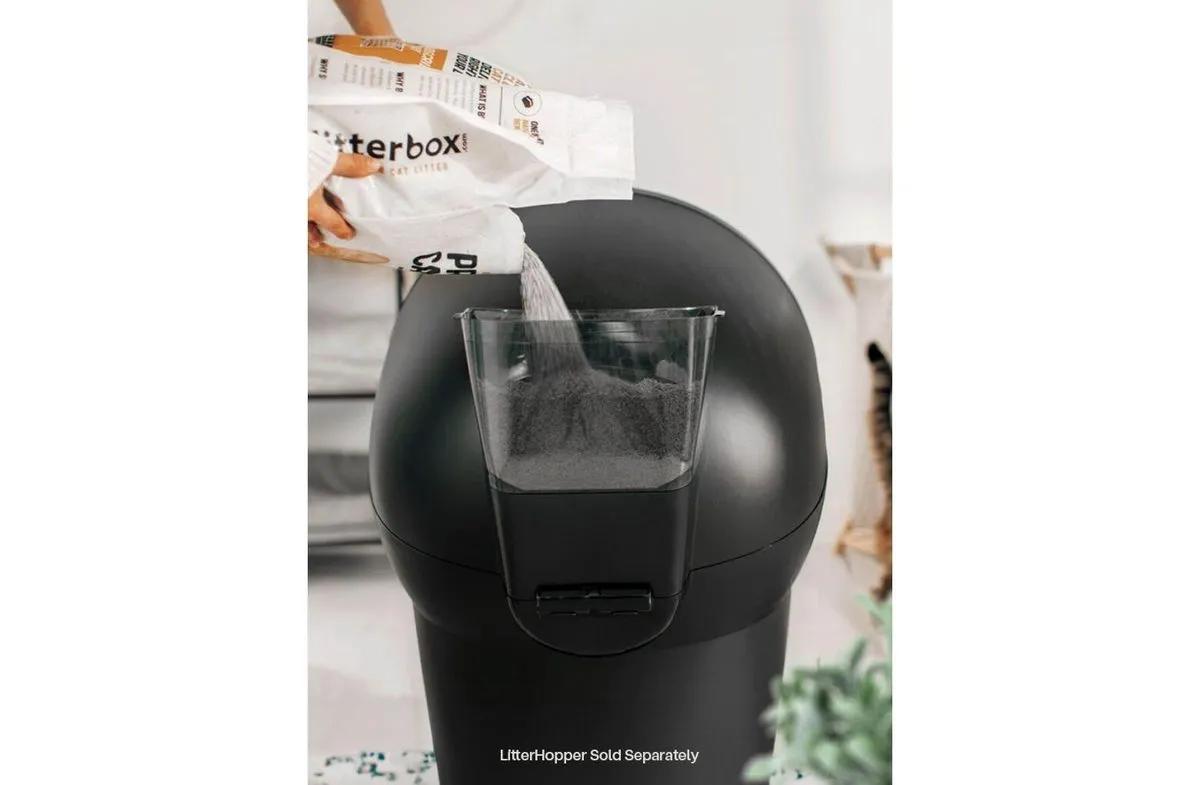
Updated: 2026-09-10. Sources: r/litterrobot post 1vwdo41 (cycle interrupted on every cycle, “clean your sensors” alerts after cleaning with cloth, q-tips and canned air; hair on the sensor edge cleared only with a microfiber cloth; failing laser board theory; motor replacement at two years in a three-cat home; Whisker support reply about the waste port and seal strips; August 24, 2026, 10 comments), r/litterrobot post 1w9emfv (apartment owner with no yard for a deep clean, glove liner and seam strips, $150 professional cleaning quote, used unit around $400, September 7, 2026, 9 comments), r/h3h3productions post 1w7og1d (four-cat household with a medicated anxious cat using the robot, anxious cat owners reporting no fear, manual cycling during the transition, September 5, 2026, 74 upvotes and 55 comments), Whisker’s official Litter-Robot 4 product page (price from $699, 4.5/5 from 14,089 reviews including 816 one-star, 90-day in-home trial, 1-year WhiskerCare and 3-year extended bundle, acclimation guidance, 2.4 GHz WiFi requirement, litter guidance, 30-minute cycle delay, September 10, 2026), Whisker’s Litter-Robot 4 replacement parts page (part prices and the free one-time in-warranty replacement list, September 10, 2026), Whisker’s LitterHopper page ($129, 1,277 reviews, own 1-year warranty excluded from the 3-year plan, September 10, 2026), Whisker’s Whisker+ page ($79.90 yearly or $7.99 monthly after a 30-day trial, 7-day free history, free SmartScale tracking, September 10, 2026), and the petiqlab articles linked above. Hero image: official Whisker product photo of the Litter-Robot 4 LitterHopper being refilled (images.litter-robot.com, product gallery).