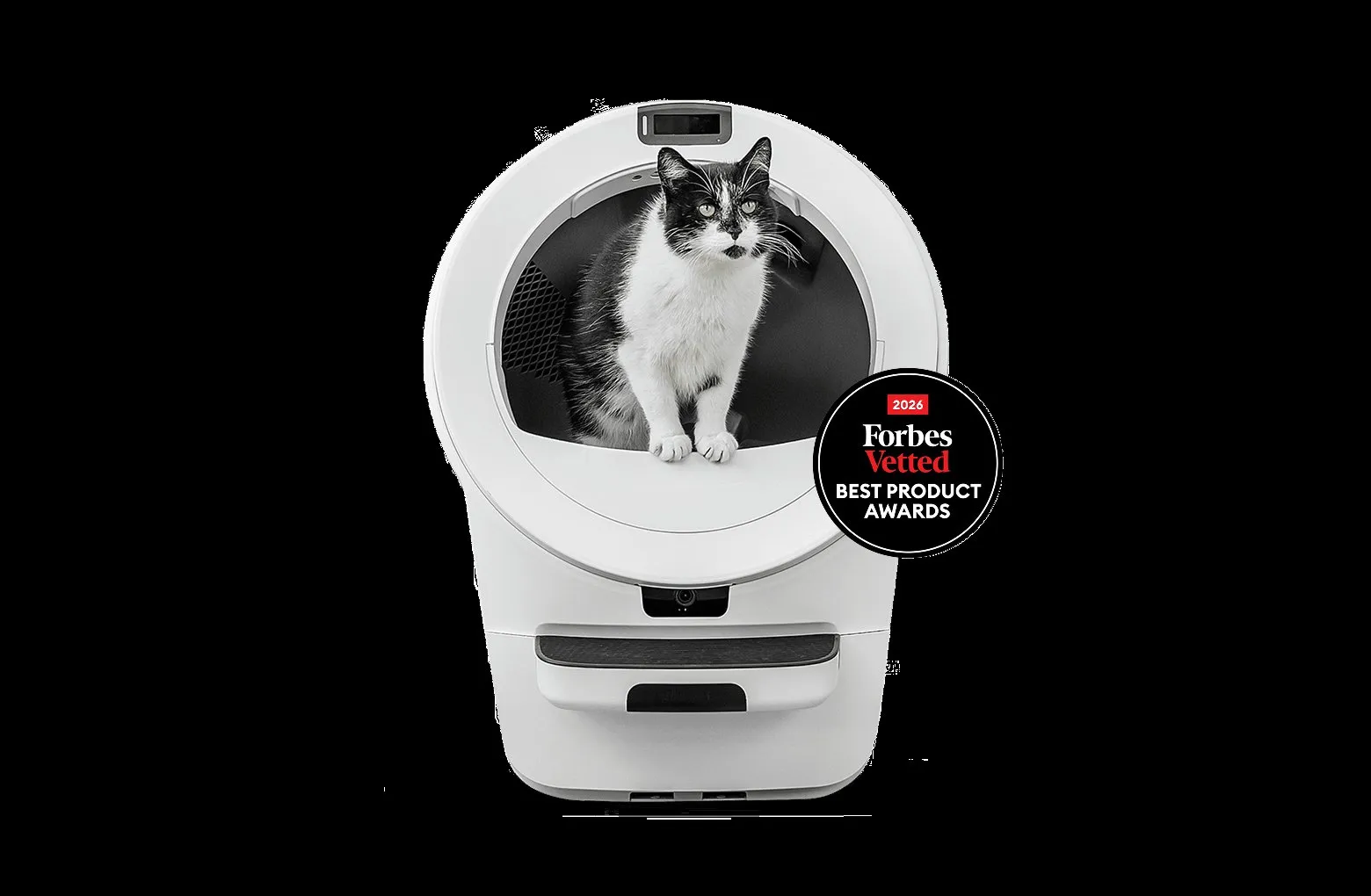
Litter-Robot 5 Pro Review: $1,000 Price, Real Safety Risk
The $1,000 Litter-Robot 5 Pro has a documented safety problem and a sensor problem. In one August 2026 case the globe kept rotating with a cat inside, and owners report false ‘overloaded globe’ alarms on units weeks old. The evidence sits in r/litterrobot threads and the brand’s Trustpilot profile (3.1/5 across 573 reviews), collected August 2026.
I spent a morning in the r/litterrobot subreddit reading every August thread about the 5 Pro, then cross-checked the posts against the brand’s Trustpilot profile, 3.1/5 across 573 reviews, and the product page itself. The pattern is consistent. Whisker’s newest flagship, priced around $1,000, ships with sensors that tell owners things that are not true. It reports a full waste drawer when the drawer is empty. It reports an overloaded globe when the litter sits below the max line. It identifies cats by weight alone and still gets it wrong. And in one documented incident, the globe kept rotating with a cat inside it.
The 5 Pro is the current top of the Litter-Robot line, the model that adds a hopper that tops up litter automatically and a bigger waste drawer on top of the LR4’s design. That is the pitch: less human involvement. The complaints that follow it are about the opposite, a machine that demands attention because its own readings are unreliable.
The 5 Pro’s documented failure profile. The Litter-Robot 5 Pro sells around $1,000 with a three-year warranty advertised on the product page, yet August 2026 owner reports on r/litterrobot (61,400 members) document a safety incident and a run of false readings. The safety thread (29 upvotes, 37 comments, 100% approval) describes the globe pausing, then resuming rotation while a cat was still inside; support blamed the cat’s behavior and suggested training. Two separate owners hit the same ‘overloaded globe’ error with litter far below the max line, on units one week to a few months old, and the documented reset loop did not always clear it. The brand’s Trustpilot profile sits at 3.1/5 across 573 reviews. Whisker+ walls off all health data older than seven days; the CSV export covers only 30 days, and a Trustpilot 1-star review (August 15) says an app update removed data owners already had.
Did the globe really rotate with a cat inside?
Yes, a documented August 2026 r/litterrobot thread (29 upvotes, 100% approval) describes the globe pausing, then resuming rotation while the cat was still inside, with support blaming the cat’s behavior.
The most serious thread, “Disappointing software and a serious safety issue” on r/litterrobot (61,400 members), carries 29 upvotes and 37 comments at 100% approval. The owner describes their cat entering the robot during the return cycle:
The globe paused for a few seconds, but then it started rotating again while she was still inside and actively using it. She got really scared and nervous. The globe should stay completely stopped whenever a cat is inside… That is a safety issue.
The same owner reported that if the cat uses the robot again right before a scheduled cycle, the machine never recognizes the second visit or resets the timer. Customer service’s answer was to manually pause and cancel cycles. Then the support rep changed tack: it might relate to the cat’s behavior, and the cat might need “additional training.”
That response is worth sitting with. A $1,000 box whose safety argument depends on sensing a cat inside the drum, and whose support channel blames the cat when that sensing fails. The owner’s summary: “Their response sounds ridiculous and doesn’t even address the problem.”
A second owner, three weeks into ownership, reported laser board faults and had the whole unit replaced. The failure mode with a cat inside is the one sensor on this machine that cannot fail, and it already has a documented miss. Open-top designs, where the entrance never closes, do not have this failure mode at all, which is a structural argument, not a brand one.
Veterinary guidance from the Cornell Feline Health Center notes that cats should be supervised around new automated equipment and introduced gradually — support’s “train the cat” answer does not address a sensor that missed a cat inside a moving drum.
Why does it say “overloaded globe” when the litter is half empty?
The short answer: the load sensor fires on false positives — two owners hit the error with litter far below the max line on units one week to a few months old, and the reset loop does not always clear it.
Two separate owners hit the same false alarm this month. One, a few months into ownership, found the robot blinking red with an overloaded globe error while the litter sat “far below the max line” (post). The other, one week in, changed the waste bag for the first time and watched the app refuse to update, keep showing the bag as full, and flag a globe overload that was not there (post):
I’ve held the button down to reset and it did say reset but still trying to cycle and won’t cycle all the way because it says overload.
Two independent owners, units between one week and a few months old, same error, same consequence: the cycle halts until the owner intervenes. The load sensor is supposed to catch a stuck or overfilled globe. When it fires on empty litter, the machine becomes a manual box that costs $1,000. The reset procedure that the app documents does not always clear it.
Why does the software argue with you?
The short answer: the launch firmware ships half-finished — wrong waste weights, urine misread as feces, phantom “in use” status, missed cycles, random litter dumps, and a camera that takes 30-60 seconds to load.
The most upvoted bug list for the 5 Pro, “LR5 Pro software bugs list” (37 upvotes, 33 comments), reads like a QA ticket dump from the launch period:
- Waste weights are wrong. “My cat does not urinate 38 ounces.”
- WasteID flags urine as feces, which makes the box cycle too quickly, before the clump has formed.
- Litter level readings in the app are inaccurate.
- The interior camera takes 30 to 60 seconds to load, and there are no recordings from inside the box at all.
- The app shows “in use” when no cat is present, so the box does not cycle.
- The box misses scheduled cycle times.
- The box randomly dumps litter into the drawer.
WasteID is the feature Whisker markets hardest on the 5 Pro, the AI that reads each visit and tells you which cat did what. When it confuses urine for feces, the cleaning cycle runs early and the litter never clumps, which is the exact problem a self-cleaning box exists to solve. Owners are paying for the AI and then working around its mistakes.
Why can’t it tell your cats apart?
The short answer: cat identification relies mainly on weight, so two similar-size cats become a coin flip, and owners report the Pet ID add-on still returns “unknown cat detected.”
The cat identification, the other headline feature, uses weight as its primary signal. A commenter on the bug thread put it bluntly: “cat identification is terrible… it only appears to use the cat weight to identify the cat… the LR5 Pro has no idea which cat uses the box.” Two cats of similar size produce a coin flip, which defeats the per-cat health tracking that the subscription sells.
Whisker sells a pet ID tag for the 5 Pro to fix this. The same owner bought it: “I even bought the pet ID tag… I don’t even think it works… I still get ‘unknown cat detected’.” So the add-on that exists specifically to solve the identification problem, in the owner’s experience, did not.
Why are first owners running the beta at full price?
The short answer: Whisker’s pattern is to launch rough and patch for two years — the LR4 took that long to become usable, and 5 Pro owners are paying $1,000 to field-test the firmware.
That quote comes from the safety thread, and it is the most useful sentence in the whole pile. The owner is an LR4 veteran: “It was like this for LR 4 where it takes almost 2 years to be finally usable.” A second long-time owner, who bought two LR4s, confirmed the arc: “with time they got it right, and my LR4s are working great… I’m hopeful the same will happen.”
That is a generous read of a $1,000 purchase: hope that the company patches the product you already paid for into working order within two years. The brand’s repair history supports the “rough launch” theory. This week alone brought an LR3 owner with two units whose sensors trip multiple times a day, another with four LR3s where two get stuck cycling until he leans on the bonnet (“sort of defeats the purpose of the $600 shitbox”), a new LR4 dumping clean litter into the tray when cycling, and an LR4 owner whose two support reps gave him two different diagnoses before suggesting a $400 base. The earlier category roundup in our smart litter box guide estimated 20-25% of Litter-Robot owners hit sensor, cycling, or mechanical faults within 18-24 months.
The 5 Pro adds a hopper, a camera, and an AI layer to a platform that already had the category’s highest 1-star share. The first owners are running the beta at full price.
Why does a $1,000 price come with a data paywall?
The short answer: Whisker+ locks health history older than seven days behind a subscription, the CSV export covers only 30 days, and an August 2026 update removed data owners already had.
The health tracking is the reason the price exists. The tracking data is the reason owners report feeling trapped. A Trustpilot 1-star review from August 15 describes an app update taking away data owners already had:
They have taken that data away from existing customers through an app update and are holding it hostage behind an eternal monthly subscription fee… Everything beyond a rolling 7 days is not exportable, not even the 30 days a vet might need.
A Reddit thread on the weight tracking (91% upvote, 25 comments) makes the same point about the data the owner generates on hardware they bought: “I can’t believe they put all of my monthly and yearly data behind a paywall… I am not paying money for my own data that I bought the robots for.” The thread’s top comments add that the LR4’s scale misidentifies cats and shows weight swings of a pound between visits, and that the official CSV export covers only 30 days in a poor format.
The health alerts do have genuine fans. Litter-Robot owners have reported the notifications catching urine crystals and sudden weight drops that turned out to be cancer, cases we covered in the subscription paywall deep dive. That makes the lock-in worse, not better: the feature with real value is the one buried behind a subscription, fed by a scale that owners say is the least reliable sensor on the machine.
What should you buy instead?
The short answer: the PETKIT Purobot Max Pro 2 — a 2-year warranty, no subscription, and an open design that removes the closed-drum failure mode behind the documented incident.
The replacement the owner communities point to is the PETKIT Purobot Max Pro 2 (on Amazon). It carries a 2-year standard warranty and no subscription for the machine itself. Its design is open, with no press bar for the entrance to pass over, which removes the closed-drum failure mode behind the documented safety incident above. Its complaint pattern is connectivity and consumables, not cycling incidents or support loops, and it is the same recommendation in our Neakasa M1 deep dive, where the warranty math mattered more than brand preference.
Nobody in this category is incident-free, and the full buying guide goes through the failure data brand by brand. For the wider picture, the smart pet devices category guide shows where litter boxes sit against feeders, fountains, and cameras. The point is not that the Purobot is perfect. It is that the two things that make the 5 Pro painful, an unreliable sensing layer and a subscription wall around your own data, are exactly the two things the Purobot’s owner base does not report.
What should you ask before spending $1,000?
The short answer: ask what happens when a sensor lies, how the drum stops during entry, who owns your data, whether the warranty covers the failure window, and how long the model has been shipping.
- Ask what happens when a sensor lies. Does a false overload block cycling until support responds, or can you clear it locally? The 5 Pro’s reset loop does not always work.
- Ask about the cat-inside failure mode. Does the drum stop completely during entry, and does it stay stopped? Closed drums have the documented incident; open designs do not have the mechanism.
- Ask who owns the data. Can you export the full history, or is anything older than a week behind a subscription? The answer decides whether the health tracking is a feature or a lease.
- Line up the warranty against the failure window. A 2-year warranty on a $400-700 appliance is the baseline; shorter means the failures will cluster after coverage ends.
- Check how long the model has been out. The first-year units are where the bug lists live. The LR4 needed about two years to become usable, and owners say so in their own words.
The 5 Pro is not a bad idea. Automating the waste drawer and litter top-up genuinely removes daily work, and the hardware does cycle, most of the time, for most owners. The problem is the layer on top of it: sensors that cry wolf, an AI that misreads its own camera, and a subscription that walls off the data the price was built around. At $1,000, you are not buying a finished product. You are paying to be the person who tells the company what the next firmware should fix.
Updated: August 18, 2026. Owner reports from r/litterrobot (August 2026), the litter-robot.com Trustpilot profile (3.1/5, 573 reviews), and the Litter-Robot 5 Pro product page. Prices and warranty terms change; verify before purchase.
FAQ
Is the Litter-Robot 5 Pro safe? The majority of owners never see an incident, but one documented August 2026 case describes the globe restarting its rotation while a cat was still inside, after pausing for a few seconds. Customer service blamed the cat’s behavior and suggested training. A Chinese market test of 25 smart litter boxes found only 7 met safety standards, so no brand gets a blanket pass. Small, skittish, or young cats in enclosed rotating drums carry more risk than the marketing suggests.
Why does the 5 Pro report an overloaded globe when it is not overloaded? Owners report the load sensor firing when the litter sits far below the max line, on units weeks to months old. One week-old unit also showed the app stuck on a full-bag status while the globe refused to finish cycling. Holding the reset button acknowledges the error but does not clear the loop for some owners. It is a documented software and sensor reliability problem on a $1,000 machine, not a user error.
Is Whisker+ worth it for the 5 Pro’s health tracking? The scale that feeds the health data is the sensor owners complain about most: reports describe the box identifying the wrong cat and weights fluctuating by a pound across visits. Beyond that, everything older than seven days sits behind the Whisker+ subscription, monthly and yearly data included, and owners say the CSV export only covers 30 days in a poor format. Vets cannot access a usable history without the owner exporting it, and owners report that is not possible.
What warranty does the Litter-Robot 5 Pro ship with? The product page advertises a three-year warranty as of August 2026. The documented complaints are less about coverage length and more about what happens when you use it: one LR4 owner was told by one support rep that a new laser board was needed, then by a second rep that a power adapter was needed, then that a $400 base might be required. Get the support path in writing before you buy.
What should I buy instead of the Litter-Robot 5 Pro? The PETKIT Purobot Max Pro 2 is the replacement owners point to: a 2-year standard warranty, no subscription for the machine, and an open design with no press bar over the entrance, which removes the closed-drum failure mode behind the documented safety incident. Its complaints center on connectivity and consumables rather than cycling incidents. No option is incident-free, so check the current owner reports for any model before buying.
Should I wait before buying a first-year smart litter box? Yes, based on Whisker’s own pattern. An owner reviewing the 5 Pro wrote that the LR4 took almost two years to become usable, and that the company launches products before testing them enough. A long-time LR4 owner confirmed the arc: with time they got it right, and his two LR4s now work well. The 5 Pro’s bug list is being written by its first owners right now, at full price.