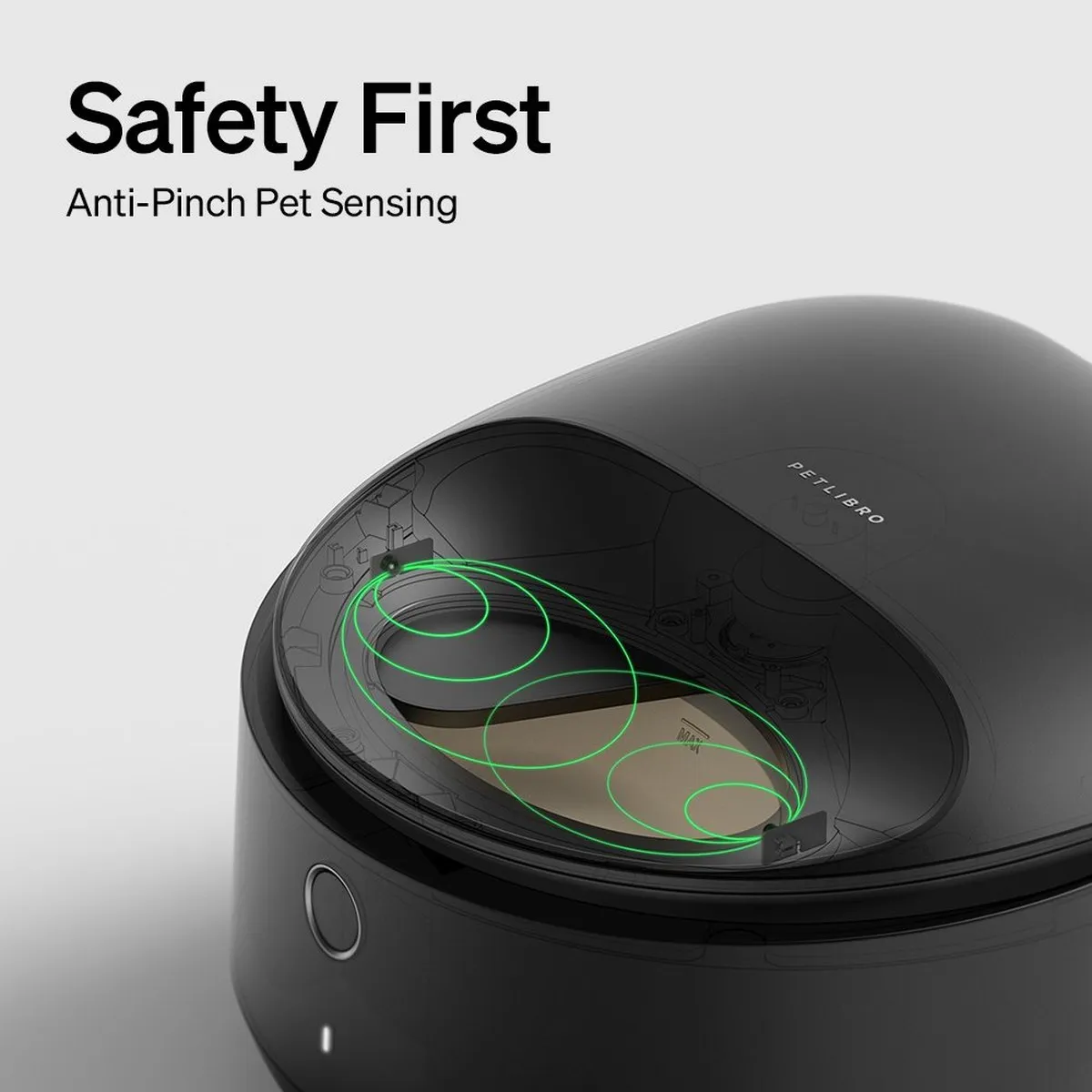
Pet Feeder Broke Twice? 3 Signals It's the Design
The short answer: a replacement that fails with the same fault as the unit it replaced is a result, not bad luck. Three signals settle whether you are holding a defective unit or a design that will do this again. The same fault shows on the second unit, other owners report that fault across months, and the replacement fails young rather than old. One test runs the other way. If the identical feeder in the same kitchen works fine, you own a defect, and the replacement is worth accepting.
I spent this week inside the one-star and five-star pools on the Trustpilot pages of PETLIBRO, PETKIT, Whisker, Furbo, Petcube and PetSafe. This month the negative reviews are unusually specific. Owners name the month their unit died, the fault, how many units they have been through, and the ticket number they are still waiting on. One has been through two refrigerated feeders. Another owns two and has a controlled comparison in her own kitchen. A third paid $742 for a litter box that leaked from day one.
petiqlab earns a commission from the Amazon links on this page. Everything below comes from public reviews and manufacturer pages read on September 23, 2026, with the links in the sources at the end. petiqlab has not tested these devices, and every quote is the owner’s own.
Why does the replacement unit fail the same way?
Because a warranty replacement swaps the unit, not the drawing. Unit two is built to the same specification as unit one: same firmware, same motor, same sensor geometry, same tolerances. It arrives in a new box and fails on the same clock.
A PETLIBRO owner put the whole arc in one review on September 16. Her first Polar began misbehaving after 3 to 4 months of daily use, with a tray that “wouldn’t stop spinning” and the light off. Support answered quickly and sent a replacement within a couple of days, which is the version of support people hope for. The replacement then “started having the same issue with the tray spinning and the light was red” after about a month. What followed is the second half of the same story: “Contacted them over the last week through email, phone, support ticket but no human response.” She asked for a refund “or at least a replacement as I am switching to another brand,” and asked the company to hire her as a support agent because “you are clearing lacking them.” Her closing line is the one to keep. The feeder is “not worth it when it breaks down right before or during a trip or when you get home from work and realize they haven’t eaten all day.”
The second case covers two units bought a year apart. On September 1, another owner wrote that the “first one lasted about a year before it just stopped cooling,” and that the newer machine “won’t stop rotating after 3 months.” Then the sentence that matters most to anyone reading a product page: “Both of these issues are widely reported on various internet forums.” Two units, two different faults, one product line, and an owner who went looking for other owners instead of a third unit.
The useful counterexample sits in the same week. An owner with two identical PETLIBRO Polar feeders posted on September 7 that “One works correctly, but the other has developed a persistent problem where it will generally open for the first scheduled meal after being reset and then subsequent meals are significantly delayed or do not open at all.” Her summary of the evidence is the sentence worth copying into your own diagnosis: “My second identical PETLIBRO feeder continues to work normally, so I have a direct comparison between the two.” That is what a defective unit looks like. The hardware answer is not in doubt, even though her support experience was just as bad as the machine: after “numerous attempts” she was told her case “was being forwarded to a supervisor,” and the supervisor never called.
A third owner, writing on August 25, had two units and neither fed reliably. “The feeder that I bought a month ago won’t open during scheduled times and I can’t even open it manually through the app.” Her representative “insists that there is no issue at all when my pets aren’t being fed.”
| What you can observe | What it usually means | What to do about it |
|---|---|---|
| The same fault on unit two | The design, because the unit is no longer the variable | Stop replacing. Change the architecture, not the box |
| One unit fails while the identical unit works | A defective unit | Accept the replacement, and ask who owns the ticket |
| The same fault described by owners in other months | A known failure mode | Ask what the fix is, not what the unit is |
| The replacement fails within weeks of arrival | The fault ships with the design, or with the refurbishment | Say no to unit three |
The three signals that say design, not bad luck
All three signals are visible without a lab, without a teardown, and without spending money on unit three.
Signal 1. The fault appears on a second unit. A first failure at month 20 is wear. The same failure at month 3 to 4 on unit one, and again at month 1 on unit two, is the machine doing what it was built to do. The September 16 review above is the template: same symptom, same tray, same light, two serial numbers apart.
Signal 2. Other owners describe the same fault in other months. The PETKIT Pura Max 2 is this month’s cleanest double sample. On August 22 a buyer wrote, “Mine has leaked urine from the base since day one, and after dozens of emails, photos, and repeated troubleshooting, PetKit didn’t provide any proper solution.” Ten days later, on September 1, a second buyer who had paid $742 described a base that “absorbs and leaks urine, creating an unbearable ammonia odor that cannot be wiped away with a simple towel and demands tedious, deep washing,” adding that support “completely ignores the identical complaints of many other users regarding this exact defect.” Two buyers, two months, one seam, and a complaint that first appears on day one, which rules out wear as the cause.
Two reports do not establish a defect rate. They do change the question, from “will my unit be faulty” to “does this machine have a path for that fault.” A spare part, a redesign, or a different mechanism all count as a path. A refusal to acknowledge the fault does not.
Signal 3. The replacement fails young. The PETKIT owner who paid nearly €600 for a PUROBOT Max Pro 2 reported that “it stopped working just 2 to 3 hours after setup.” Support “assured me they would ship a replacement unit and explicitly told me I could dispose of the broken one.” Eight days later nothing had been sent, the case was relabeled an “internal error,” and he was told to “return it to Amazon myself.” A device that dies in its first afternoon is not a wear failure, and a 2-to-3-hour life is not a variance you fix by shipping the same unit again.
What a replacement does to the warranty clock
A replacement usually does not restart the warranty. On the terms petiqlab read this month, the clock runs from the original purchase date, so unit two arrives with whatever is left of the original window, and unit three arrives with less. The policy detail sits in our read of PETLIBRO’s 24-month warranty and its 30-day clause.
The clearest account comes from an owner whose rating moved the other way, which is why it is worth reading in full. On August 30 she wrote, “I am changing my rating to 5 starts because the company made good on their warranty and my new Polar feeder was delivered today.” Then, in the same review, the arithmetic that nobody puts on a product page: “The new feeder will be under the same warranty window as my last, which means I’ll have less than a year left under warranty (from the date the first one was purchased). If this one breaks, I’ll switch to a different brand of refrigerated feeder.” She kept her view of the hardware too, noting that “it seems like the cooling function is prone to breaking on these.”
| Purchase | Unit 1 fails | Replacement arrives | Warranty left on the replacement |
|---|---|---|---|
| Month 0 | Month 11 | Month 12 | 12 months, running to month 24 |
| Month 0 | Month 20 | Month 21 | 3 months |
| Month 0 | Month 24 | Month 25 | None, unless the brand offers goodwill |
That table is the mechanism behind the year-two failure wall petiqlab documented in its teardown of post-warranty failures. The first failure eats the term. The second failure arrives later than the first, by definition, and later is the part of the term that no longer exists. The end of the clock looks like this, from a review posted on September 9. A buyer paid €170 for a feeder that “didn’t even last a year” and wrote that the machine “was only maybe 1 month outside the manufacturer’s warranty” when he filed. “I was told that my case would be forwarded to the relevant team, but despite waiting, I still haven’t received any response or solution.” The same wall shows up across brands. A PetSafe fountain owner wrote on September 14, “I was submitting a warranty claim and they told me to buy a new fountain. Was within 1 year of purchase. I have 5-10 year old fountains from other brands that work fine.”
What to ask before you accept a replacement
Five questions, in this order. Ask them in writing, in your existing ticket, so the answers are on the record.
- Is this the same revision? Ask for the part number or hardware version of the replacement. If the model was revised, the answer may be yes, and unit three will repeat unit one. If the answer is “the same unit,” you now know what the RMA buys.
- What date does the new warranty run to? The owner above found out the answer in the worst possible way, after the exchange. Ask before you agree to it, because the second failure is the one that lands outside.
- Who owns the ticket, and what is the number? This is the difference between a queue and a person. One owner was told her case “was being forwarded to a supervisor” and never heard from the supervisor again. Another chased email, phone and support tickets for a week and got “no human response.” A ticket number plus a named agent is the only combination that survives a shift change.
- Do they ship first, or do you? The €600 machine that died in its first hours came with a verbal promise of a replacement and an instruction to dispose of the broken unit. Eight days later, nothing had shipped, the case was called an “internal error,” and the owner was told to return the machine to Amazon himself. Get the shipping sequence in writing before you throw anything away.
- If the same fault returns, what is the exit? Ask now, while support is still answering you, whether the second failure qualifies for a refund or a different model. The owner with two failed Polar units asked for exactly that in September, and got no answer.
When the replacement is a part, the clock is the problem
A part-based fix beats a whole-unit replacement every time the part exists, with one exception. The part can take longer than the machine did. A PETKIT owner wrote on September 14 that he waited “almost three months to receive a simple replacement part,” and that he “had to keep chasing them,” including insisting on his own delivery details and tracking number. Then the honest ending: “The part finally arrived and I had to install it myself. It is now working properly.” Three months, a self-install, and a working machine. That is a bad quarter and a good outcome, which is the trade this category offers.
The same month shows the version that works. Whisker reviewers name agents who ordered parts on a phone call and said when to expect them, and a PETLIBRO reviewer described a rep who “got on the phone with me,” confirmed what was needed, and had a replacement part out “within the same week.” Parts availability is the reason petiqlab keeps recommending devices whose wear items are sold on their own, a pattern covered in the spare parts audit.
The counter-argument, because it is real
Reviews about failures select for failures. The same six Trustpilot pages carry the other half, and it is not small. Replacements arrive. Claims get paid. Ratings move up.
The best evidence for that is the owner of the replacement Polar quoted above, a one-star review that ends at five stars and says so plainly. A PETLIBRO reviewer on September 16 named a support agent who “didn’t hesitate to honor the warranty and replace the defective feeder.” Another, on September 12, described a claim that first went quiet, then recovered: “At first they responded but then did not respond after several messages. I went ahead and replaced my unit at my expense and it arrived damaged… they made it right by sending a new unit to replace the damaged unit and were very responsive.” A four-device owner on September 21 wrote that the products “offer great value for money” and that support was helpful and responsive “throughout the process.”
Outside the feeder category, the strongest counter-evidence is a Whisker case from September 16. A Litter-Robot 4 owner was out of warranty, had lost her job, and could not afford a replacement after her cats scratched through the globe liner. She sent photos, and “within minutes of sending them, I received a notification that a new liner had been ordered for me free of charge.” A Neakasa owner with 18 months on a three-cat M1 reported a sensor fault and got a fast resolution from support. PETKIT’s positive pool this month is about machines doing the boring things well: “no mess, no stained floor, no extra cleanup,” three Savannahs adapting fast enough that the owner bought two more units within weeks, and one buyer who prefers her box to a Litter-Robot 4 that cost $1,000.
The reply numbers as measured on September 23, 2026 put the replacement question in context. A brand that answers is not the same as a brand that resolves, and neither is the same as a machine that does not need the call.
| Brand | Score and review count | Replies to negative reviews | Typical reply time |
|---|---|---|---|
| petlibro.com | 3.4 across 990 | 67% | Within 2 weeks |
| litter-robot.com (Whisker) | 3.2 across 598 | 96% | Within 1 week |
| petkit.com | 3.6 across 304 | 79% | Within 1 week |
| petsafe.net | 2.2 across 229 | No badge published | Not stated |
| furbo.com | 2.9 across 132 | Has not replied to negative reviews | Not stated |
| petcube.com | 3.2 across 765 | Has not replied to negative reviews | Not stated |
| neakasa.com | 4.4 across 159 | Not published | Not stated |
Five checks before you buy
- Read the one-star pool for a repeated sentence, not a repeated score. The method in this article is two independent reports of the same fault from different buyers in different months. That took ten minutes, and it beat every spec sheet.
- Count the failure modes you cannot service yourself. A dry feeder has a wheel, a sensor and a lid. A refrigerated unit adds a compressor, a fan, a temperature sensor and a heavier power budget. More subsystems means more paths back to the same RMA queue.
- Check that the wear item is sold separately. A $16 pump, a $12 filter or a replaceable liner turns a dead machine into a Tuesday afternoon. A part that is never sold turns it into a return.
- Confirm there is a human channel before you buy, and test it in the first month. Some brands publish no phone number at all, which was the reason one Furbo owner threw a camera away and bought from “a more reputable company” after an AI chatbot looped product questions at him. The pre-purchase version of this test is in our support ghosting checklist.
- Write down the serial number of the unit you own today. When unit two fails, the serial is how you prove the second machine is a different machine, and it is the first thing a support agent asks for.
What petiqlab recommends instead
The pick for this page is the feeder whose report you can read at the machine. The PetSafe Smart Feed keeps its schedule on the device with a battery backup, lists at $134.99 with a 45-day return window, and its parts go in the top rack of a dishwasher. Treat it as a product rather than a brand badge, because PetSafe’s brand-level Trustpilot score is 2.2 across 229 reviews with no reply badge published. The fountain in that line is the failure case quoted above, and petiqlab’s position on it is unchanged: this recommendation covers the Smart Feed, not the brand.
For multi-cat homes where the fault is a reader that will not open a bowl, the SureFeed microchip feeder has no app, no account, no server and no firmware channel, which removes the entire software half of the loop. It carries a three-year warranty, and it keeps its registered pets in memory when the batteries come out. Two disclosures travel with it. Owners in the brand’s own community report sensor faults that needed a reset, and the connected version of the line is where the chip-reading complaints cluster, which is why this pick is the offline one.
For checking what actually happened, the TP-Link Tapo C210 records to a local microSD card without a subscription. When you file a claim, the video is the evidence that a support agent asks for first, and it costs $35 to $40 to own that answer in advance.
The PETKIT Eversweet 3 Pro is here for the part you can buy. Its wireless pump sells on its own for about $16, which is the difference between a fountain with a worn pump and a fountain in the bin. The honest caveats from this month’s threads are that the pump can need 20 to 30 minutes of retries after a refill, that the brand’s Trustpilot score is 3.6 across 304 reviews with the newest complaints landing on litter boxes rather than fountains, and that a fountain is still a machine with a motor in it.
FAQ
Why did my replacement pet feeder fail the same way as the first one? Because a warranty replacement swaps the unit, not the design. The second machine is built to the same specification, with the same firmware, motor and sensor geometry, so it can fail on the same clock. A PETLIBRO owner documented a tray fault that stopped her first Polar after 3 to 4 months and stopped the replacement after about a month, and a second owner reported a Polar that stopped cooling at around a year and a newer one that would not stop rotating after 3 months.
How do I tell a defective unit from a design flaw? Three signals point at the design: the same fault appears on a second unit, other owners describe that fault in other months, and the replacement fails young rather than old. One test points the other way. If an identical feeder in the same house works normally, you own a defect, and the replacement is worth accepting. An owner with two Polar units wrote that one works correctly while the other opens only for the first meal after a reset.
Does a replacement unit restart the warranty? Usually not. On many pet tech warranties the term runs from the original purchase date, so a replacement arrives with whatever is left of the original window. One owner, whose rating went from one star to five after her claim was honored, wrote that the new feeder would be under the same warranty window as the old one, leaving her less than a year from the date of the first purchase. Read your own policy before you accept, because terms differ.
Should I accept a replacement or ask for a refund? Accept it if the fault has appeared on one unit while an identical unit works, and ask for a refund if the fault has followed you to a second unit. The questions that decide it are covered in the article: which revision you are being sent, what date the new warranty runs to, who owns the ticket, who pays shipping, and what happens if the same fault returns. An owner who had been through two units asked for a refund or another replacement and could not get an answer at all.
What if the replacement is a part instead of a whole machine? A part-based fix is the better outcome when the part exists and keeps existing. One PETKIT owner waited almost three months for a simple replacement part and had to chase the courier details herself before installing it, and reported the machine then worked properly. Whole-unit replacement is the slowest and most expensive fix, which is why a device with a buyable pump, filter or liner avoids the loop entirely.
Which pet devices are least likely to become a replacement loop? Favor designs with fewer failure modes you cannot service yourself. The PetSafe Smart Feed keeps its schedule on the device, the SureFeed microchip feeder runs with no app, account or server, and the PETKIT Eversweet 3 Pro sells its wireless pump as a separate part for about $16. A dry-food feeder with a wheel and a sensor has less to break than a refrigerated unit with a compressor, a fan and a lid mechanism on one power budget.
Updated: 2026-09-23. Sources: Trustpilot one-star reviews for petlibro.com, read September 23, 2026, including 6aaa97ac (a first Polar failing at 3 to 4 months with a spinning tray, a replacement arriving within a couple of days and failing with the same tray fault after about a month, then “no human response” across email, phone and support tickets, September 16, 2026), 6ab180bd (a first Polar that “lasted about a year before it just stopped cooling,” a newer unit that “won’t stop rotating after 3 months,” the owner’s note that “both of these issues are widely reported on various internet forums,” and 3 weeks without a response while the web chat “just creates more support tickets,” September 1, 2026), 6aaa96b0 (two identical Polar feeders, one working and one opening only for the first meal after a reset, the documented app failure “Failed to open lid. Please try again” beside a red indicator light, and a case “forwarded to a supervisor” that was never followed up, September 7, 2026), 6aa865e6 (two Polar wet feeders both under a year old, neither working consistently, a one-month-old unit that will not open on schedule or manually, and a representative insisting “there is no issue at all,” August 25, 2026), 6ab29ee5 (a USB power port claim that took almost 2 months and “dozens of tests,” with the owner’s reading that support keeps asking for new information “hoping you will give up,” September 21, 2026), 6aaf8e8a (a €170 feeder that “didn’t even last a year,” filed at “only maybe 1 month outside the manufacturer’s warranty,” answered with a promise that the case “would be forwarded to the relevant team” and then silence, September 9, 2026), 6a9ec72b (a PUROBOT Max Pro 2 that stopped working “2 to 3 hours after setup,” a promised replacement and an instruction to dispose of the broken unit, then 8 days of silence, an “internal error,” and a demand to return it to Amazon, September 7, 2026), 6aa8314d (almost 3 months for a simple replacement part, the owner chasing delivery details and courier tracking herself, and the machine working properly after a self-install, September 14, 2026), 6aa29068 (a $742 Pura Max 2 whose fabric base “absorbs and leaks urine” with an ammonia odor that resists wiping, and the claim that support “completely ignores the identical complaints of many other users regarding this exact defect,” September 1, 2026), 6a961bab (a Pura Max 2 that “has leaked urine from the base since day one,” dozens of emails, photos and troubleshooting with no proper solution, September 22, 2026), and 6ab2a0e6 (a PetSafe fountain claim inside one year of purchase answered with advice to “buy a new fountain,” against the owner’s 5-to-10-year-old fountains from other brands, September 14, 2026), plus Trustpilot positive reviews for the same profiles: 6aa3141b (a rating changed to 5 stars after a warranty replacement arrived, with the owner’s note that the new unit carries the same warranty window as the original purchase and that the cooling function on the line is “prone to breaking,” August 30, 2026), 6aaaae45 (a named agent who “didn’t hesitate to honor the warranty and replace the defective feeder,” September 16, 2026), 6a9dbd3c (a rep who “got on the phone with me” and sent a replacement part “within the same week,” August 14, 2026), 6ab02e78 (a self-funded replacement that arrived damaged and was then replaced by the company, September 12, 2026), 6ab18154 (a four-device owner calling support helpful, friendly and responsive, September 21, 2026), 6aac4abe (an out-of-warranty Litter-Robot 4 owner sent a free globe liner after photos, September 16, 2026), 6aaed132 (agents who ordered parts by phone and set delivery expectations, September 18, 2026), 6ab27c04 (an 18-month Neakasa M1 sensor fault resolved quickly, September 19, 2026), 6aabb286 (a PETKIT litter box described as “no mess, no stained floor, no extra cleanup,” September 16, 2026), 6aaeca41 (three Savannahs adapting fast enough that the owner bought two more units, September 18, 2026), and 6aa7ff73 (a PETKIT box preferred to a Litter-Robot 4 that cost $1,000, August 21, 2026); Trustpilot profile pages for litter-robot.com (3.2 across 598 reviews, replies to 96% of negative reviews within a week), petkit.com (3.6 across 304, 79% within a week), petsafe.net (2.2 across 229, no reply badge), furbo.com (2.9 across 132, “Hasn’t replied to negative reviews”), petcube.com (3.2 across 765, same label) and neakasa.com (4.4 across 159), all read September 23, 2026, with petlibro.com at 3.4 across 990 reviews and replies to 67% of negative reviews within 2 weeks; the PETLIBRO Polar product page (the official product photograph used as the hero image on this page, read September 23, 2026); the PETKIT Eversweet 3 Pro page (the wireless pump sold as its own product, read September 23, 2026); the PetSafe Smart Feed product page ($134.99, 45-day return window, dishwasher-safe parts, read September 23, 2026); the Sure Petcare microchip feeder page (three-year warranty and a sealed bowl, read September 23, 2026); Amazon listings for the PetSafe Smart Feed, SureFeed microchip feeder, TP-Link Tapo C210 and PETKIT Eversweet 3 Pro with its $16 spare pump; and the petiqlab articles linked above, including the wet food feeder failure guide and the false-lead checklist for a feeder that looks broken. Prices and availability change; verify before purchase.