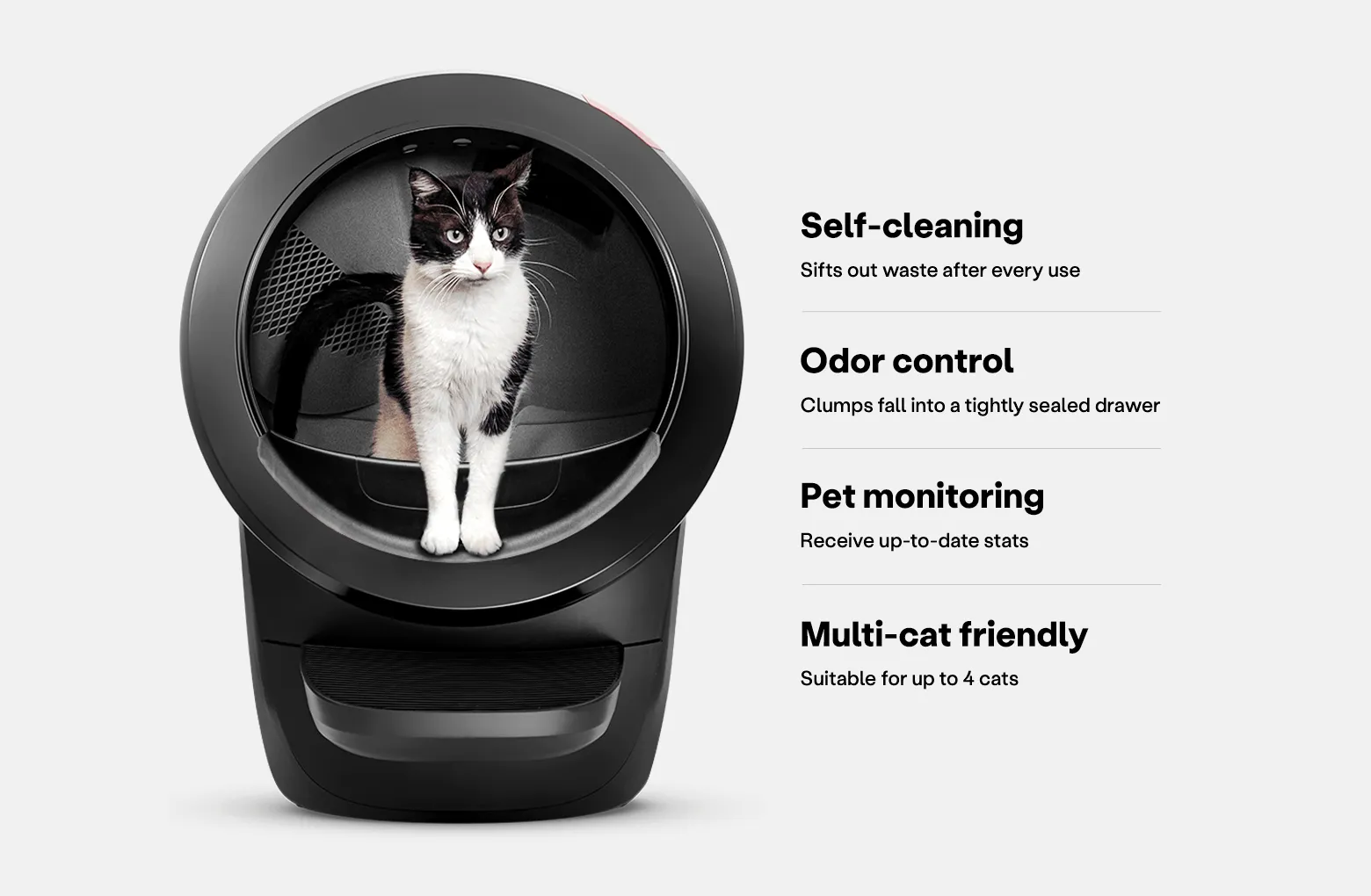
Automatic Litter Box Safety: 5 Checks from 2026 Owner Reports
The short answer: some automatic litter boxes sold under the “Litter Robot” name are not made by Whisker, and owner threads document the risks of buying one. The genuine Whisker product has its own documented record: sensor reports, a $700 machine that died at year two, and a warranty response owners describe as “one time courtesy.” Five checks before you buy: verify the seller, confirm the safety sensors, ask what happens when a cat is inside the drum, read the warranty in writing, and check litter compatibility. This is a critical consumer review based on public owner reports; we have no affiliation with Whisker. Purchases through links on this page may earn us a commission.
I spent an evening reading the safety threads on r/CatAdvice and r/litterrobot, then cross-checked each one against the brand’s Trustpilot profile (3.1/5 across 573 reviews) and the current product pages. The scariest post in the pile is not about Whisker at all. It is about the sellers who borrow the name.
The warning thread has sat at the top of r/CatAdvice for two years. It still collects upvotes. The pattern it describes is simple: a seller uses the “Litter Robot” name, ships a box that is not a Litter Robot, and some of those boxes hurt cats. The genuine brand pays the price for the association, which is exactly what the counterfeiters want.
What are owners actually reporting?
The short answer: the most-shared warning on r/CatAdvice is about sellers who borrow the brand name, and it names them. The thread, “Litter ‘Killer’ Robot” (1,904 upvotes, 256 comments, posted September 2024 and still circulating), opens with the sentence owners keep sharing:
Some of these automatic litter boxes are actually killing cats. This is not about the actual ‘Litter Robot’. From what I can tell it’s a certain company that uses the name ‘Litter Robot’ but it’s not the actual one. Another name they use is ‘Amztoy’… They are paying to have negative reviews removed.
Two claims there. First, counterfeit boxes: sellers on marketplaces list units under the “Litter Robot” brand name while the actual seller is a different company, “Amztoy” among the names. Second, review manipulation: the post says the sellers pay to have negative reviews scrubbed, which is why the listings keep looking clean.
The video side of the fear is just as loud. A January 2026 X post, “Litter robot swallowed cat” (62 likes, 11,041 views), spread a clip of a cat being pulled into a rotating drum. It is the kind of clip that makes a buyer swear off the whole category. Read the comments under it and you find the same distinction the PSA makes: owners of genuine units arguing the video is a knockoff, owners of knockoffs arguing they wish they had checked.
That distinction is the whole article. A genuine Litter-Robot is not the same machine as a “Litter Robot” sold by a seller with three products and a name that almost matches. But the genuine product is not innocent either. It has its own documented failure modes, and the next three sections are about those.
What sensor stops the cycle when a cat is inside?
The short answer: the safety bar sensor, and in the most cited incident it was the only thing that stopped the drum. The sensors can also fail, which is why “does the cycle pause when a cat enters” is a question to ask before buying, not after.
The most shared thread on this, “Cat chose to die in litter robot” (485 upvotes, 75 comments, February 2026), is not about a failure. The owner’s cat used the box for 8 years and chose it as the place to die. The cycle started anyway, 7 minutes after:
Because it cycled it (7 mins after) it was halfway cycled so her arms were sticking through the hole. It was a traumatic way of finding her… Im thankful for the safety bar sensor because I dont even want to think about what could have been.
Read that twice. A cat’s death was discovered mid-cycle. The safety bar sensor is what the owner credits for limiting the damage. That sensor, plus the weight sensors that detect a cat entering, are the difference between a machine that stops and a machine that keeps turning.
Now read it against our Litter-Robot 5 Pro review, where a documented August 2026 thread describes the globe pausing, then resuming rotation while a cat was still inside. A support reply suggested the cat might need training. The safety layer on the newest flagship already has a documented miss. Open-top designs, where the entrance never closes, do not have this failure mode at all, because there is no door and no press bar to trap anything.
Sensors also age. Our smart litter box guide tracked owners reporting the LR4’s sensors degrading around year four, with false “drawer full” alarms and misread weights. A safety sensor that fired correctly for 8 years in the thread above is the best case. The realistic case is a sensor that degrades, and the question is whether the design still stops when it does.
What does the warranty cover when a $700 unit dies at year two?
The short answer: often a “one time courtesy,” which is warranty language you should read before you buy, not after. The owner in the most cited thread paid $800, the motor died at year two, and Whisker offered a replacement motor as a favor.
The thread, “Finally said goodbye to Litter Robot” (June 2026), walks through the whole arc. The plastic absorbed odor no matter how deep the cleaning. Then the motor error appeared in the app and the cycle stopped:
Two months ago I got a notification on my app that my motor had an error, it wouldn’t cycle at all. I called Whisker and they said they would send me a new motor as a ‘one time courtesy’ which rubbed me the wrong way. I paid practically $800 for a product that didn’t even work properly for two years and you’re calling this a courtesy?!
The words that matter are “one time courtesy.” That is not a warranty term. It is a favor, which means it can be declined next time. The same pattern shows up in our Neakasa M1 deep dive: a 16-month-old unit refused under a 12-month warranty, and a 30-day “any reason” refund that came with a several-hundred-dollar return shipping bill.
The second most telling complaint thread, “After several years of use I can safely say the litter robot is NOT WORTH IT” (48 comments), is about the failure window itself:
It’s smooth sailing initially - but ohh boy welcome to error hell once that honeymoon period wears off… Do not buy. You will come to regret as I have.
He had just inhaled a lungful of litter dust manually resetting the machine after yet another flashing yellow light. His summary for the category: “bro, you have one job.”
Here is the warranty math you should run before buying, using numbers owners actually reported:
| Box | Street price | Advertised warranty | Documented failure window | What owners hit |
|---|---|---|---|---|
| Litter-Robot 4 | $649-$704 (bundle, Labor Day 2026) | 3 years | months to year 4 | false “full” alarms, sensor aging, Whisker+ data wall |
| Litter-Robot 5 Pro | ~$1,000 | 3 years | first weeks to months | false overload, safety incident, bug list |
| Neakasa M1 | ~$429 | 12 months | 12-16 months | 16-month death refused, sensor false “full” |
| PETKIT Purobot Max Pro 2 | $499.99 | 2 years | n/a in our data | connectivity and consumables, adaptation risk |
Whisker’s Labor Day 2026 promo, posted on X by @9to5toys on August 24, starts bundles at $704 after a $100 discount. That is a lot of machine to buy on the strength of a “courtesy.” Our category guide estimates 20-25% of Litter-Robot owners hit sensor, cycling, or mechanical faults within 18-24 months. Line the warranty up against that window: a 2-year warranty on a $400-700 appliance is the baseline. Shorter than that means the failures cluster after coverage ends.
Can your litter choice break the sensors?
The short answer: yes, and the brand says so itself. Translucent or white litter degrades the drawer-full and litter-level sensors, per Whisker’s own support reply.
The official reply sits in a r/litterrobot thread from August 5, 2026:
Translucent or white-colored litter affects the accuracy of the Drawer Full Indicator and Litter-Robot’s LitterLevel. We suggest using a darker color…
So the sensor that tells you when to empty the drawer, and the sensor that tells you how much litter is left, both assume dark litter. White or translucent litter, which is a big share of what pet stores sell, degrades both. The machine’s own maker says the machine misreads its own box under a common input.
Add the buyer’s list of pre-purchase worries from a January 2026 r/CatAdvice thread (17 upvotes, 34 comments):
My main concerns are: reliability (i’ve read stories about them getting stuck), noise level (my cats are skittish), and whether it can truly handle three cats. Also… does it work with any clumping litter or do you have to buy their specific expensive kind? … I’m worried about spending all that money and then having a fancy paperweight.
A $700 paperweight. That phrase comes up again and again in this category. And one more worry is spreading beyond it: a BuyItForLife thread (67 upvotes, late August 2026) argues a litter box should not become useless because an app stops working. After the PETLIBRO outage took feeders offline for days, that fear has a date on it. Check whether the box cleans without WiFi, and whether a paid plan gates anything.
Five checks before you spend $700
The short answer: these five checks, in order. Number one is the one the 1,904-upvote thread is about.
The full version of each check:
- Verify the seller, not the title. The “Litter Robot” in the listing title may be a name borrowed by a seller called something else. Buy from the manufacturer’s storefront or an authorized retailer, and treat “Amztoy” or any near-name seller as a hard stop.
- Confirm the safety sensors. Safety bar, anti-pinch, weight-based entry detection. Ask what each one does and what happens when it fails. The 485-upvote thread credits the safety bar with the difference between trauma and worse.
- Ask about the cat-inside failure mode. Does the drum stop completely during entry, and does it stay stopped? Closed drums carry the documented incident. Open designs lack the mechanism entirely.
- Read the warranty in writing. A 2-year warranty on a $400-700 appliance is the baseline. “One time courtesy,” “12-month coverage,” and “30-day refund” have all produced documented refusals. Get the exact terms before paying.
- Check litter and offline behavior. White litter blinds the Litter-Robot sensors per the brand’s own support. And if the box needs the app to clean, the app is a second point of failure.
What should you buy instead?
The short answer: the PETKIT Purobot Max Pro 2, the pick owner communities land on for the same reasons the complaints above exist: a 2-year standard warranty, no subscription, and an open design that removes the closed-drum failure mode.
The PETKIT Purobot Max Pro 2 (on Amazon) sells at $499.99 and covers the checks above: 2-year standard warranty, no subscription for the machine, an 8L sealed waste bin with contactless drawstring packing, up to 17 days hands-free, a 43% larger entry for bigger cats, and an open top with no press bar, which is the structural reason its owner base reports connectivity and consumable complaints rather than cycling incidents. It is the same recommendation in our Neakasa M1 deep dive and our cat rejection guide, where the adaptation risk is spelled out: some cats refuse enclosed automatic boxes entirely, so keep the old tray during the first weeks.
No brand in this category is incident-free, and the full buying guide goes through the failure data brand by brand. The point is not that the Purobot is perfect. It is that the three failure patterns owners document above, counterfeit listings, sensors that miss a cat inside a drum, and warranty language that reads like a one-time favor, map to checks the Purobot’s owner base does not report.
Should you buy a Litter-Robot at all?
The short answer: if you insist on Whisker, buy the LR4, not the first-year models. The community’s trust is split by generation, and the data backs the split.
The r/litterrobot community has spent 2026 defending the LR4 while its newer siblings take fire. A 554-upvote meme thread, a 116-upvote thread about a cat obsessed with the machine, and the comment sections under the Evo review threads all carry the same message from LR4 owners: “5/5 pro/EVO 全是抱怨” (77 upvotes), “the good reviews are all LR3/LR4.” The LR4 is the model the community still trusts.
Keep the caveats from our Evo review in mind before you act on that trust. The LR4 has its own documented record: sensors that degrade around year four, false “full” alarms, and the Whisker+ wall around your own health data, which our subscription analysis covers. First-year models across the industry are where the bug lists live, Whisker’s own pattern included. If you buy Whisker, buy the generation that has been patched for two years, not the one that is being patched by its first owners at full price.
The five checks above are cheap. A counterfeit box, a dead motor at year two, or a cycle that runs with a cat inside is not. Print the list, run it against whatever listing you are looking at, and read the warranty terms in writing before you pay.
Updated: September 5, 2026 (revised reissue). Owner reports from r/CatAdvice and r/litterrobot (September 2024 through August 2026), the litter-robot.com Trustpilot profile (3.1/5, 573 reviews), X posts from @TaraBull and @9to5toys, and Whisker’s official support replies. Prices and warranty terms change; verify before purchase.
FAQ
Are knockoff automatic litter boxes actually dangerous? A 1,904-upvote PSA on r/CatAdvice warns that some automatic litter boxes sold under the “Litter Robot” name are not made by Whisker, and that owners link certain units to cat deaths. The post names “Amztoy” as one of the names these sellers use and says the sellers pay to have negative reviews removed. Genuine Whisker units are a different product, but they have their own documented sensor and warranty problems. Buy from the brand’s official storefront or authorized retailer, never from a seller with a slightly different brand name.
How do I check that an automatic litter box is genuine before buying? Check the seller name on the listing, not just the product title. Counterfeit units ride on the “Litter Robot” name while the actual seller is a no-name store. Buy from the manufacturer’s own site or their official storefront on the marketplace, compare the listed model name against the brand’s current lineup, and treat a price far below the standard street price as a warning sign. Whisker’s genuine models are the Litter-Robot 3, 4, 5, 5 Pro, and Evo.
What safety sensors should an automatic litter box have? Look for a safety bar or anti-pinch sensor at the entrance, weight-based cat detection that pauses the cycle, and a cycle that aborts when the cat enters mid-rotation. The 485-upvote r/litterrobot thread documents a cat dying inside a box she had used for 8 years, with the cycle still starting 7 minutes later; the owner credits the safety bar sensor for stopping worse. Sensors age and fail, so ask how long the model has shipped and read current owner reports before buying a first-year model.
What does the Litter-Robot warranty actually cover? Current Litter-Robot models advertise a 3-year warranty, but the documented friction is in the wording. One owner paid $800, had a motor failure at year two, and Whisker offered a replacement motor as a “one time courtesy,” language the owner read as a warning rather than coverage. Another owner’s Neakasa unit died at 16 months and was refused under a 12-month warranty. Ask for the exact terms in writing: what is excluded, whether the warranty resets, and what happens after the first repair.
Which automatic litter box do you recommend? The PETKIT Purobot Max Pro 2 at $499.99: a 2-year standard warranty, no subscription for the machine, an 8L sealed waste bin with contactless drawstring packing, up to 17 days hands-free, and an open design without a press bar, which removes the closed-drum failure mode behind the documented safety incidents. No brand is incident-free, and some cats refuse enclosed automatic boxes entirely, so check current owner reports and keep your old tray during the first weeks.