Security Camera as Pet Camera: The $259.96 Three-Year Bill
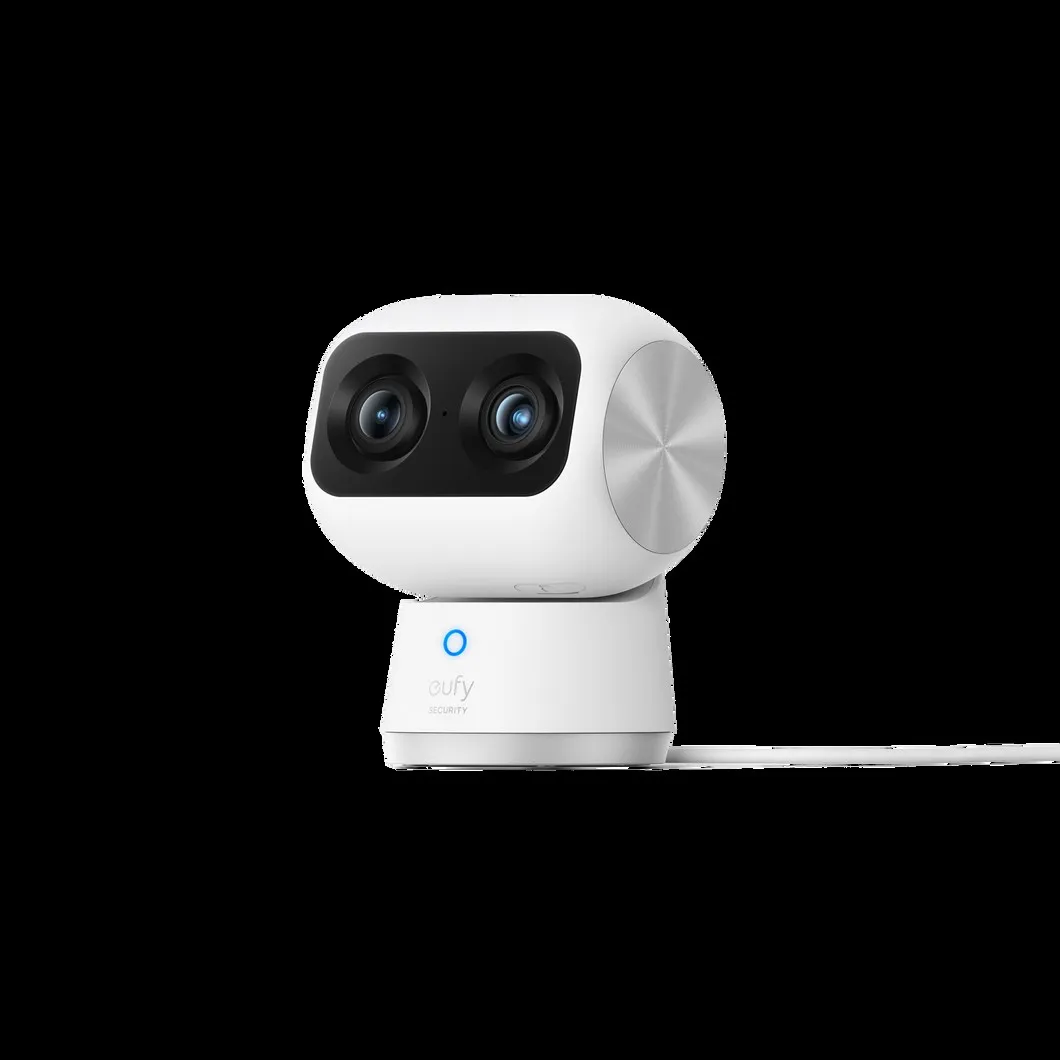
The short answer: the camera is the cheap half. eufy sells the Indoor Cam S350 for $139.99, and Cloud Backup for one device runs $3.99 a month or $39.99 a year for a rolling 30-day history, on a plan that eufy’s own help article says users cannot cancel directly. Three years of that plan brings one camera to $259.96. Reolink’s Argus 4 Pro records to a microSD card of up to 512GB with no monthly fee, and reolink.com answers 98% of negative Trustpilot reviews against 6% at eufy.com. If the job is watching a cat, buy the camera that writes to a card you own, budget the card, and stay out of the billing screen.
I opened three pages on 2026-11-03 and read them in order. The first was eufy’s Cloud Backup help article, which states that the plan cannot be cancelled by users and that the request has to go through support with the camera’s serial number. The second was the Basic Plan subscription agreement, last updated 2026-10-27, which points to a cancel button inside the app. The third was a Trustpilot review posted on 2026-10-30 by an owner who had spent four months trying to cancel and never found a working option in the app.
One of those documents is stale, one is new, and the person caught between them owns a camera that may be watching a cat right now. petiqlab earns a commission from the Amazon links on this page. Everything below comes from manufacturer pages, support articles and owner reviews read on 2026-11-03, with every link listed at the end.
Is a security camera cheaper than a pet camera?
At the sticker, yes. Over three years, the gap narrows to something you have to do arithmetic on.
A $139.99 eufy Indoor Cam S350 plus $39.99 a year for Cloud Backup comes to $259.96 across 36 months. The local version of the same camera is not cheaper. eufy’s HomeBase S380 lists at $199.99 and takes up to 16TB of expandable storage, and the hard drive is not in the box, so a one-camera local build lands at $339.98 before a disk. The Reolink microSD route is the only one of the three that adds no recurring charge and no second box.
| Storage path | What you buy | Recurring cost | Where the footage sits |
|---|---|---|---|
| eufy Cloud Backup | Indoor Cam S350, $139.99 | $39.99 a year | eufy servers, 30-day rolling |
| eufy HomeBase S380 | Camera plus a $199.99 hub | $0 | A drive you buy, up to 16TB |
| Reolink microSD | Argus 4 Pro plus a card | $0 | Card in the camera, up to 512GB |
Set that against the subscription camera this site has already priced. A Furbo 360 at roughly $200 plus about $60 a year per camera runs $380 over three years, and every extra unit adds the same fee again. The three-year cost comparison runs those numbers line by line.
What does eufy Cloud Backup cost at each tier?
eufy sells Cloud Backup in four tiers, and the cheapest entry costs $3.99 a month or $39.99 a year, a saving of $7.89 across twelve monthly charges. Two devices cost $7.99 a month or $79.99 a year, which saves $15.89. Three devices cost $11.99 a month or $119.99 a year, a saving of $23.89. The Plus Plan covers unlimited devices at $13.99 a month or $139.99 a year. Every tier keeps a rolling 30-day history, so day 31 overwrites day 1 and a deleted clip is gone for good. One account holds one package at a time, so a buyer on the one-device Basic Plan cannot add a second camera without switching tiers. Paying yearly saves $27.89 on the Plus tier against twelve monthly charges of $13.99. eufy’s support article adds a harder limit, in that payment methods cannot be changed in the app or the web portal at all.
| Plan | Monthly | Annual | 12 monthly charges | Annual saving |
|---|---|---|---|---|
| Basic, 1 device | $3.99 | $39.99 | $47.88 | $7.89 |
| Basic, 2 devices | $7.99 | $79.99 | $95.88 | $15.89 |
| Basic, 3 devices | $11.99 | $119.99 | $143.88 | $23.89 |
| Plus, unlimited | $13.99 | $139.99 | $167.88 | $27.89 |
The 30-day limit is the part pet owners underestimate. A cat that stopped eating on a Tuesday and looks thin the following month has usually fallen out of the window by the time anyone thinks to check the footage, because the cloud keeps a month and then overwrites it.
Why can’t eufy owners cancel the plan from the app?
Here is the sentence from the Cloud Backup help article, read on 2026-11-03. “The cloud Backup cannot be canceled directly by users now. To cancel your cloud backup, please contact us and provide us with the serial number of the camera for which you want to cancel the cloud backup.”
The same article gives three more rules. A monthly plan stops renewing with no refund for the current month. An annual plan deducts the months used and refunds the remainder. A purchase made through Apple or Google has to be cancelled through Apple or Google, for both the cancellation and the refund.
Now read the newer document. The Basic Plan subscription agreement, last updated 2026-10-27, says the plan can be cancelled at any time via the eufy app, through Sidebar, Services, Basic Plan, Plan and Billing, Cancel. It ends with a hedge that undercuts the word “any time”. “Cancellations may take time to process and may not be immediate.” That agreement also binds the Basic Plan to a HomeBase Professional S1, which is a different product from the Cloud Backup tiers above, and that difference is why two pages can disagree without either one lying.
The owner’s experience sits outside both documents. That review from 2026-10-30 reads, “I have been trying to cancel my Eufy cloud storage subscription for 4 months without success. I could not find any working cancellation option in the app.”
What that means for a buyer is practical. Photograph the serial number on the camera before mounting it, keep the order email, and cancel in writing with the serial in the first email. If the plan was bought in an app store, the eufy article and the app store both have to be involved, and the refund follows the app store’s rules rather than eufy’s.
Does Reolink need a subscription for a pet camera?
No, for the recording part. The Argus 4 Pro takes a microSD card of up to 512GB, pairs with a Reolink Home Hub for several cameras, and the product page says outright that local storage carries no monthly fee.
The hardware is not a toy either. The Argus 4 Pro shoots 4K across a 180 degree field from two lenses, rates IP66, adds 30% battery life against an older IR model by Reolink’s own lab figure, and charges enough in 10 minutes for 24 hours of running. A solar panel can be attached. For a yard, a garage or a cat flap on a back door, that is a competent camera at a price with no second invoice attached.
The weakness is where the footage lives. A card inside a camera leaves with the camera if someone takes it, and a card fails without warning after enough write cycles. Cloud storage earns its fee at exactly that moment, which is when a camera is stolen, not when a cat is being watched. Reolink sells cloud storage as an optional service for that reason.
Which brand answers support faster, eufy or Reolink?
On Trustpilot, the gap is not subtle. eufy.com holds 3.1 out of 5 across 14,080 reviews, answers 6% of negative reviews, and the profile adds that replies typically take over one month and that the company may use AI-assist with replies. reolink.com holds 4.0 out of 5 across 3,865 reviews, answers 98% of negative reviews, and typically replies within 48 hours.
Read the badge carefully, though. That percentage counts replies posted on Trustpilot, not tickets solved in a support system, and a company can answer in public while a customer waits in private.
Reolink’s counter-example is dated 2026-10-24. “AI tech support that refuses to answer… my older cameras have stopped charging on their solar panels.” The owner reports roughly 10 emails about a solar panel that stopped charging.
eufy’s counter-example is dated 2026-10-30, from a HomeBase 3 owner with an outdoor camera. “I can not click on the camera on the app to get a live picture. It goes around and around, and then says retry.”
Both complaints describe the same failure of the same layer. The camera works, the app does not, and the person on the other end is a bot.
How long does the warranty last on each brand?
Two warranty numbers decide what a camera plan is worth, and the gap runs from 12 months at eufy to 2 years at Reolink plus 6 months on registration. eufy’s warranty table gives a security camera 12 months, the same 12 months for a HomeBase, and lists accessories as not applicable. Reolink gives 3 years on the Professional Series, a 30-day refund counted from delivery, return shipping paid on a dead-on-arrival unit, and a replacement covered for the remaining term or 90 days, whichever is longer. The mismatch bites on a three-year plan. eufy Cloud Backup at $39.99 a year bills $119.97 across 36 months, and the camera stops being covered after month 12, so two-thirds of the subscription runs on hardware with no warranty behind it. A camera bought in November 2026 carries cover to November 2027 and a plan to November 2029.
The eufy refund policy adds a detail that catches people late. A 30-day money-back request expires 30 days after a warranty claim is opened, which means the clock can run while an owner is still arguing about the fault.
That is not a reason to skip the plan. It is a reason to know which month the plan stops protecting anything.
What can’t a security camera do for a cat?
Five gaps, in the order they annoy owners.
Treat tossing. No eufy or Reolink model throws a treat, and the pet cameras that do charge for the privilege through a plan. The Furbo file covers how that math works out.
Per-pet recognition. The Argus 4 Pro sorts people, vehicles and animals. It does not know which cat is which, so a two-cat house gets one alert stream and no separation.
A routine for separation anxiety. Pet cameras offer recorded voice, music or a scheduled treat drop. A security camera offers live view and a microphone.
Room audio. Two-way talk on a security camera is tuned for a doorway conversation at a metre, not for a cat mewing across four metres of carpet.
History length. Cloud keeps 30 days and a card keeps what fits. A three-week trip plus a week of denial outlasts both, and the clip that would have explained the problem is gone.
What should you check before buying one?
Five checks, each with a number attached.
- The three-year cost of the storage path. $259.96 for a cloud camera, $339.98 for a hub build, card price plus $15 to $25 for the local route.
- The cancellation route, in writing, before you pay. For eufy Cloud Backup that means an email to support with the serial number, not a button.
- Warranty length against plan length. 12 months of eufy cover against 36 months of billing is the number to sit with.
- The Trustpilot reply badge and the reply time, together. 6% and over one month reads differently from 98% and 48 hours.
- Whether playback needs a plan. On the Reolink card route it does not, which is the whole point of the card.
Which camera should a pet owner buy instead?
The one this site keeps recommending for watching a cat is the TP-Link Tapo C210, at roughly $35 to $40 with a microSD card and no plan. Live view, two-way audio, motion alerts and card playback work without a billing screen, and the Tapo review covers the limits of a budget pan and tilt unit. The C225 step-up adds 2K and color night vision, and the Tapo line is listed on Amazon at B095CLQ1PT. The no-subscription guide prices the alternatives, and the night vision failures piece is worth reading before anyone buys a camera for a dark hallway.
If the budget runs higher and the yard is the target, the Reolink Argus 4 Pro is the better camera and the better support record, at the cost of a stolen card taking the footage with it.
Three disclosures. petiqlab has not run a eufy or Reolink unit in a lab, so the specifications above are the manufacturers’ own numbers read on 2026-11-03. The Trustpilot figures are a snapshot of the same day and move. And the card is not free either, at $15 to $25 once, which is still less than one year of Cloud Backup.
A camera that answers 98% of complaints and writes to a card you own is not the compromised option. It is the version that survives a bad month without a second invoice, which is all a person watching a cat actually needs.
FAQ
Do I need an eufy subscription to use the camera for a pet?
No, but the camera ships without storage of its own. eufy sells Cloud Backup as an add-on at $39.99 a year for one device, and it also sells the HomeBase S380 at $199.99 for up to 16TB of local storage on a drive you supply. The subscription buys 30 days of rolling cloud history and remote access to it, not the camera itself. A buyer who wants zero recurring fees has to pay for the hub instead, or pick a camera that writes to a card.
How do I cancel eufy Cloud Backup?
The support article, read on 2026-11-03, says the plan cannot be cancelled by users directly and asks you to contact eufy with the serial number of the camera. A monthly plan stops renewing with no refund for the current month. An annual plan refunds the unused months after deducting the months used. If you subscribed through Apple or Google, the article sends you to Apple or Google for both the cancellation and the refund.
Does Reolink charge a monthly fee for a pet camera?
No for local recording. The Argus 4 Pro takes a microSD card of up to 512GB, and the product page states that local storage carries no monthly fee. A Reolink Home Hub holds recordings from several cameras the same way. Reolink Cloud exists as an optional service for offsite copies, which is the part that costs money. The trade is that a card inside a stolen camera leaves with the thief.
Which brand has the longer warranty on a camera used for pets?
Reolink, by a year. Its warranty page gives 2 years on new cameras and adds another 6 months when the product is registered, with 3 years on the Professional Series. eufy’s warranty table gives a security camera 12 months, a HomeBase 12 months, and lists accessories as not covered at all. The gap matters because the plan outlives the cover, and billing continues after month 12.
What does three years of pet monitoring actually cost?
Three paths, three numbers. One eufy Indoor Cam S350 plus three years of Cloud Backup is $259.96, and $119.97 of that is the plan. The same camera with a HomeBase S380 is $339.98 before you buy a hard drive, then $0 a year. A Reolink Argus 4 Pro with a high-endurance card is the camera price plus about $15 to $25 once. Only the first path keeps charging after the warranty ends.
Can a security camera replace a pet camera?
For watching, mostly yes. For interacting, no. The Argus 4 Pro detects people, vehicles and animals and carries two-way talk, and eufy’s app streams live video to a phone. What neither brand ships is treat tossing, per-pet recognition, or a routine for separation anxiety. If the reason for buying is a dog that panics when left alone, a camera that only watches answers half the question.
What is the cheapest camera setup that still works without a plan?
A TP-Link Tapo C210 at roughly $35 to $40 plus a 64GB to 128GB high-endurance card at $15 to $25, which is $50 to $65 once and $0 a year. Live view, two-way audio, motion alerts and card playback all work with no billing screen, and playback survives an internet outage because the footage never leaves the room. The Tapo review covers the limits, and the no-subscription guide covers the rest of the field.
Updated: November 3, 2026. Sources: the eufy Cloud Backup help article read on 2026-11-03 (four tiers from $3.99 a month to $139.99 a year, rolling 30-day history, “The cloud Backup cannot be canceled directly by users now”, payment methods not editable in the app or web portal, Apple and Google Pay routed to the app store); the eufy Basic Plan subscription agreement last updated 2026-10-27 (app cancellation path, “Cancellations may take time to process and may not be immediate”, binding to a HomeBase Professional S1); the eufy warranty and refund policy (security camera 12 months, HomeBase 12 months, accessories not applicable, 30-day money-back, refund requests expiring 30 days after a claim is opened); the eufy Indoor Cam S350 listing at $139.99 and the HomeBase S380 listing at $199.99 with up to 16TB of expandable storage and the drive sold separately; the Reolink Argus 4 Pro page (4K 180 degree dual lens, microSD up to 512GB, Home Hub support, “No Monthly Fees For Local Storage”, IP66, 30% more battery life, 10 minutes of charging for 24 hours); the Reolink warranty and return policy (2 years plus 6 months on registration, 3 years on the Professional Series, 30-day refund from delivery, return shipping paid by Reolink on a dead-on-arrival unit, replacement covered for the remaining term or 90 days); Trustpilot for eufy.com (3.1 out of 5, 14,080 reviews, 6% of negative reviews answered, replies typically taking over one month, AI-assist disclosed) and Trustpilot for reolink.com (4.0 out of 5, 3,865 reviews, 98% of negative reviews answered, replies typically within 48 hours, profile claimed in April 2020), both read on 2026-11-03; the 2026-10-30 eufy review about four months of failed cancellation and the 2026-10-30 eufy review about a live view that never loads; the 2026-10-24 Reolink review about AI support and dead solar panels; and this site’s own three-year cost comparison for the Furbo figures. Prices, plans and review counts change, so verify them before you buy.