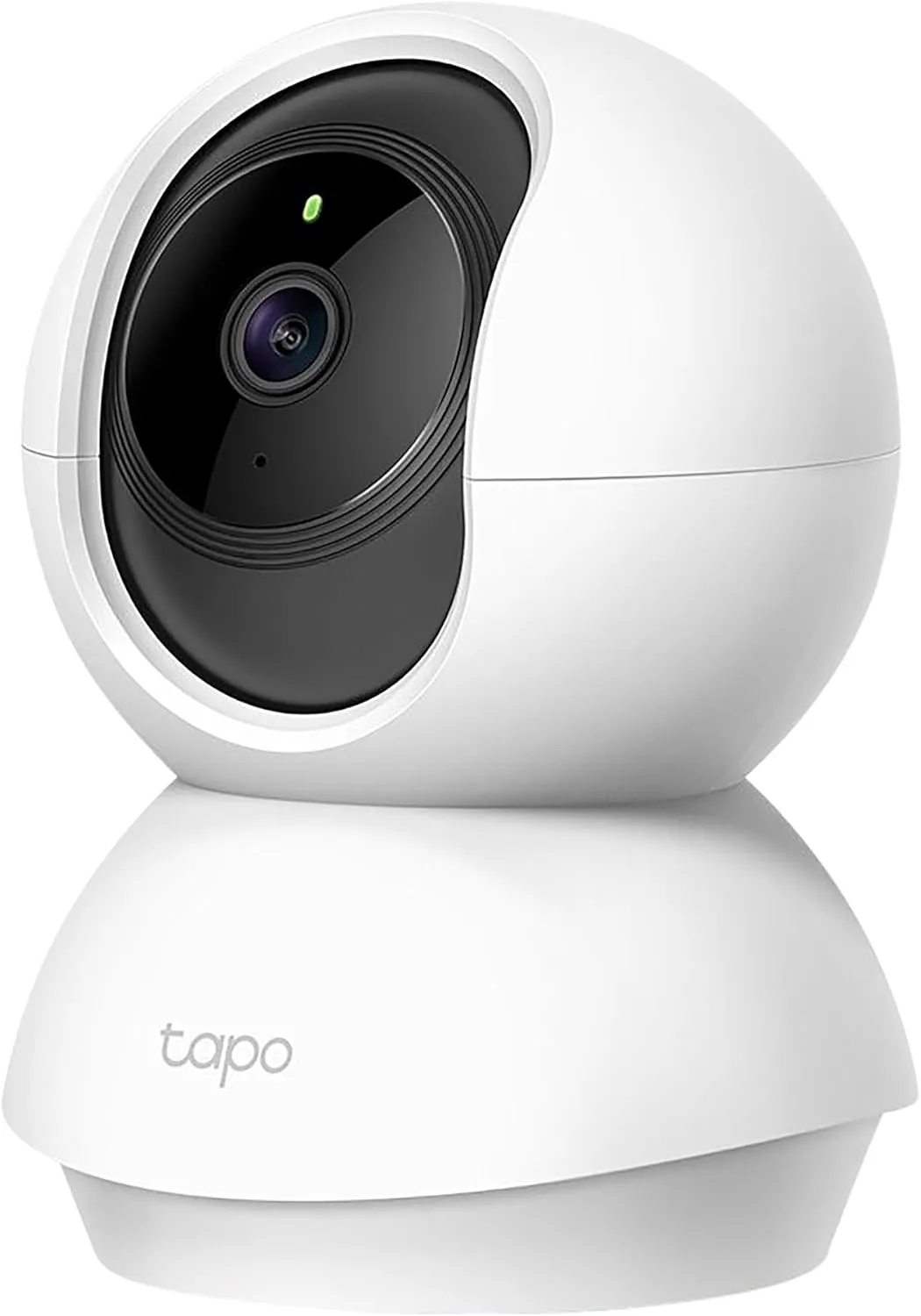
TP-Link Tapo Pet Camera Review: No Subscription, $0 per Year
The short answer: TP-Link Tapo is the no-subscription answer to the pet camera category. Live view, two-way audio, motion detection, and microSD playback all work free, with nothing to renew in year two or three. A C210 pan/tilt model costs about $35-40 once, while a Furbo 360 runs roughly $455 over three years at the base plan, a 13x gap, before Furbo’s reported $60/year surcharge for every additional camera. Footage writes to a card you own, so there is no cloud ladder and no locked archive if a plan lapses. Certain models add AI pet detection that alerts only when a cat or dog enters the frame. The app runs on 2.4 GHz Wi-Fi, night vision is infrared on most models and full color on newer ones, and a 64-128GB high-endurance card covers days of recording for a one-time $15-25.
I spent an evening on Furbo’s Trustpilot page, reading one-star reviews in order, and the first thing that stopped me was the split. On Amazon, the same camera carries roughly 6,000 verified reviews, 87% of them at four or five stars (TruthfulPaws aggregation, collected August 2026). On Trustpilot’s furbo.com store page, it scores 2.7/5 across 125 reviews, with 73% at one star and only 20% at five. Same product, two verdicts that don’t belong to the same camera.
I went through the five-star pool too, and those reviews mostly describe the hardware: clear video, two-way audio, a polished app. Then I went back to the one-stars and read them twice, because the complaints rarely mention the camera at all. Corrie in Canada, reviewing the Furbo Mini 360, put the whole one-star pool into one sentence: “Everything about it is designed to force you into a subscription.”
What surprised me wasn’t the subscription complaints themselves. It was how many of them came from owners who clearly liked the camera. Full functionality (24/7 continuous recording, unlimited treat tossing, part of the AI alerts) sits behind a plan that runs about $6.99-9.99/month. The paywall shows up at setup, after the box is open and the app is installed. Roughly 40% of the one-star reviews are billing disputes and paywalled features, by my count of the review file. People bought a camera and found out they’d also bought a yearly fee. If you want the full complaint file, I wrote it up separately.
TP-Link Tapo runs the other side of that market: same core job, no subscription, footage on a card you own. This review covers the Tapo line with the C210 pan/tilt model as the reference point, and the question I’m answering is whether Tapo is the buy-it-once answer for owners who refuse to be locked into a plan.
Do Tapo cameras require a subscription?
No, live view, two-way audio, motion detection, and local playback all work free. Year two and year three cost nothing because there’s nothing to renew.
Live view, two-way audio, motion detection, and local playback all work free. Plug in, connect, done. Year two and year three cost nothing because there’s nothing to renew. Against Furbo’s paywall, the documented source of most of its one-star reviews, this is Tapo’s biggest difference, and it’s the difference owners notice first. The app does offer optional paid cloud storage, but it gates nothing you’d miss on day one.
Where does Tapo footage go?
The short answer: to a microSD card you supply and own. Pull the card anytime, replay from the app, and keep footage even when Wi-Fi drops, with no cloud ladder or locked archive.
Recordings write to a microSD card you supply. Buy the capacity you want, pull the card anytime, replay from the app. There’s no “free 7 days, paid 30 days” cloud ladder, and no locked footage if a plan lapses, because there’s no plan. One less subscription to cancel, one less auto-renewal to forget, and a card that keeps playing even when the Wi-Fi drops.
Does Tapo detect pets without alert spam?
Yes, on models with pet detection. Certain Tapo cameras detect cats and dogs and alert only then, cutting the every-passing-shadow spam; entry models stick to plain motion detection.
Certain Tapo models detect cats and dogs entering the frame and only then push a notification, which cuts the every-passing-shadow alert spam that buries real events. For owners who work days and replay in the evening, that maps straight to the question that matters: what did the pet do while I was out? Multi-pet households can filter playback by pet activity. Entry models stick to plain motion detection, so check the specs before you pick a model.
What does three years of Tapo cost?
The short answer: about $35-40 once, against Furbo’s roughly $455 over three years, a 13x gap, and every extra Furbo camera adds a reported $60/year.
Subscriptions are annual contracts, so a fair comparison needs a multi-year window. Here’s the picture at current US retail (August 2026), using the same figures as our pet camera subscription cost comparison:
| Camera | Hardware | Yearly fee | Three-year total |
|---|---|---|---|
| TP-Link Tapo C210 | ~$35-40 | $0 | ~$35-40 |
| Furbo 360 | ~$99 (promos as low as $44-45) | ~$84-120 (base plan) | ~$455 |
That’s a 13x gap over three years, and the Furbo figure assumes one camera. Every additional Furbo unit adds a reported $60/year surcharge on top of the base plan, so a three-camera home pays roughly $270/year before the hardware is even counted. Three Tapos cost three microSD cards, about $30, once. For the price of Furbo’s subscription alone, you can buy a new Tapo every year and still have change left over.
Two years is friendlier to Furbo and still lopsided: roughly $267-339 all-in for one camera (hardware plus the base plan), against a Tapo that costs about $35-40 once. The gap only widens from there, because the Tapo price is a one-time number and the Furbo price is a repeating one.
How does Tapo compare to the Furbo 360?
The short answer: Tapo matches Furbo on core monitoring at $0/year with local storage, while Furbo adds treat tossing and stronger separation-anxiety wins but gates core features behind a plan.
| Dimension | TP-Link Tapo (recommended) | Furbo 360 (contrast) |
|---|---|---|
| Annual cost | $0, no subscription | Paid plan unlocks full features |
| Recording storage | Local microSD, footage is yours | Core recording/playback behind subscription |
| Core features | Live view, two-way audio, motion detection, AI pet detection, SD playback | Two-way audio, treat tossing, bark/emergency alerts, Pet ID multi-pet recognition (partly subscription-gated) |
| Pan/tilt | 360° on some models (e.g., C210) | 360° + auto-tracking, “no positioning needed” per its fans |
| Night vision | IR on most models, full color on newer ones | Color night vision, “looks like daytime” (Sara Ondrako) |
| Separation anxiety | Two-way voice comfort, works with daily training | More documented wins (e.g., Eve Barrett’s rescue dog) |
| Subscription controversy | None | Trustpilot 2.7/5, 73% one-star, concentrated on subscription disputes |
Data notes: Furbo figures come from the collected review file (Trustpilot, collected 2026-08-12; TruthfulPaws statistics). Tapo specs reflect the brand’s publicly documented positioning; individual models differ, so verify against the official product page before buying.
What does Furbo still do better?
The short answer: treat tossing, color night vision, and documented separation-anxiety wins, real strengths worth roughly $120/year if you use them daily.
The life-saving stories in Furbo’s positive pool are real. Haley Hankins: “Furbo alerted us before disaster!” when a smoke alarm went off while the family was away. Eve Barrett credited the camera with settling her new rescue dog’s separation anxiety. Color night vision and 360° coverage get consistent praise, and my read of 60+ real positive reviews turned up the same pattern (what pet owners actually love in 2026).
The problem is the cost structure, not the hardware. The more capable the feature set, the more of it leans on a subscription. Owners pay every year just to keep using what they bought. Tapo runs the other way: the features people actually use are free by default, and the choice stays with the owner.
If your dog lives for treat tossing, Tapo can’t replace Furbo, and pretending otherwise wastes your money. And if you’re buying for a pet with separation anxiety, Tapo’s two-way voice channel helps alongside daily training, but it won’t run Furbo’s automatic music-and-treat routine. Those are real Furbo strengths. The question is whether they’re worth roughly $120/year on top of the hardware.
Furbo works out for a specific owner: someone who tosses treats daily, wants clip history in the cloud, and has already decided the yearly fee is entertainment money. For that owner, the 2.7/5 Trustpilot score doesn’t tell the whole story either. The rest of us get the same live view, the same two-way audio, and footage we actually own, for a yearly cost of zero.
Expert guidance from Consumer Reports on home security cameras notes that local storage keeps footage under your control and avoids recurring cloud fees, the same reason Tapo’s microSD approach sidesteps the paywall complaints that dominate Furbo’s review profile.
Who should buy a Tapo camera?
The short answer: owners done with yearly fees, budget households, privacy-minded owners who want local footage, and single- or two-pet homes with everyday monitoring needs.
Tapo fits:
- Owners done with yearly fees who want a camera that runs five years without another dollar spent
- Budget households that want the “I can see my dog while I’m out” basics for the price of a mid-range video game
- Privacy-minded owners who want footage on their own card, off the cloud, playable locally even offline
- Single- and two-pet households with everyday monitoring needs: live view, motion alerts, pet detection
Tapo doesn’t fit:
- Treat tossing. Mainstream Tapo models have no treat dispenser; that’s the Furbo-class differentiator. If tossing snacks from the office is the point, Tapo is the wrong camera.
- Heavy users needing 24/7 cloud archives plus advanced AI behavior analysis. That’s a subscription-camera workload.
- Anyone expecting “out of the box, trained dog.” Tapo gives a two-way voice channel for comfort; behavior training still takes daily work.
Which Tapo model should you pick?
The Tapo line spans entry cameras, pan/tilt models, and color-night-vision versions, and the spec that matters most depends on your use case. Entry models handle live view, two-way audio, and motion detection, which covers the basic check-on-the-dog job. If you want alerts only when an actual cat or dog enters the frame, look for a model that lists pet detection explicitly. If you mostly watch at night, prioritize full-color night vision over standard infrared. What doesn’t change across the line: the free app, local microSD storage, and the absence of a subscription. The category guide prices the Tapo line at roughly $35-40, and the official product page has the exact spec sheet for the model you’re considering.
What should you check before buying a Tapo?
The short answer: confirm pet detection on your model, budget for a microSD card, pick night vision for your use, plan the spot and 2.4GHz Wi-Fi, set treat expectations, and check the current price.
- Confirm pet detection is on your model. Entry models do motion detection only. If you want alerts only when an actual cat or dog enters the frame, look for “pet detection” in the spec list.
- Budget for a microSD card. A high-endurance 64-128GB card covers days of continuous recording for a one-time $15-25, not a recurring fee.
- Pick night vision for your use case. Standard infrared covers most rooms; newer models add full-color night vision. If you mostly watch at night, spend the extra dollars on a color model.
- Plan the camera’s spot. Pan/tilt cameras want a plug near the room’s center line, and the app runs on 2.4GHz Wi-Fi. Test the signal before you mount anything.
- Set expectations on treats. No Tapo model tosses snacks. If that’s the whole point of a pet camera, Furbo is the mainstream answer, and you’re accepting the subscription. My no-subscription pet camera guide walks through the trade-off in full.
- Check the current price. The C210 sits around $35-40 at US retail and moves around; verify the number on the official product page before checkout.
Is the Tapo worth it?
Yes, it does the 80% of pet watching most owners need — live view, two-way audio, pet-aware alerts, and footage you own — at a yearly cost of zero, minus treats.
One Furbo one-star review from an eight-year owner ended with the advice he now gives everyone: “Either keep it connected and use all the time or buy a Tapo.” That line stayed with me because it comes from someone who paid Furbo’s price for years before switching.
The Tapo C210 won’t toss treats, and it won’t run a music-and-treat routine for a stressed dog. What it does is the 80% of pet watching most owners actually need (live view, two-way audio, pet-aware alerts, footage you own) at a yearly cost of zero, on a camera that’s yours the moment you pay for it. If you want a pet camera with no renewal to manage, this is the most straightforward answer I’ve found: check it on Amazon.
Disclosure: the link above is an affiliate link. If you buy through it, we may earn a commission at no extra cost to you.
FAQ
Do Tapo cameras really work without any subscription? Yes. Live view, two-way audio, motion detection, and SD card playback work free with no mandatory plan. Optional paid cloud storage exists but gates no core feature. That is the whole point of the line versus subscription cameras: nothing stops working when a billing cycle ends, because there is no billing cycle. Owners report year two and year three cost exactly nothing.
Where do Tapo recordings go? On a microSD card you supply. Footage writes to local storage, and you can pull the card or replay from the app anytime. Recordings don’t depend on a subscription staying active. A 64-128GB high-endurance card covers days of continuous recording for a one-time $15-25, and playback keeps working even when the Wi-Fi drops.
Does Tapo have pet detection? Certain models include AI pet detection that alerts when a cat or dog enters the frame and can filter playback by pet activity. Entry models focus on motion detection, so check specs before buying. The pet filter cuts the every-passing-shadow alert spam, which is the main reason owners turn notifications off on other cameras.
Can a Tapo camera comfort a dog with separation anxiety? It offers a two-way voice channel: hear barking and talk to your dog remotely, which works alongside daily desensitization training. There’s no Furbo-style automatic music-and-treat routine, so set expectations accordingly. Owners pair the voice channel with training and report it helps; the camera alone won’t settle a stressed dog the way a treat toss can.
Tapo or Furbo for an average pet household? For low cost and low hassle, Tapo wins: $0/year and local storage. For interactive extras like treat tossing and automatic soothing, Furbo does more but requires a subscription. Basic monitoring favors Tapo; choose Furbo only if the interactive features are worth the yearly fee.
How good is Tapo night vision? Most models offer infrared night vision for low-light monitoring, and some newer models support full-color night vision. If night viewing is your main use, prioritize a color-night-vision model. Standard IR covers most rooms; color night vision costs a little more and reads like daytime in the app, which matters when you check in at 2 a.m.
Updated: August 12, 2026. Furbo score data from Trustpilot’s furbo.com profile and TruthfulPaws, collected August 2026. Tapo pricing is US retail as of August 2026 and moves around; verify current prices before you buy.