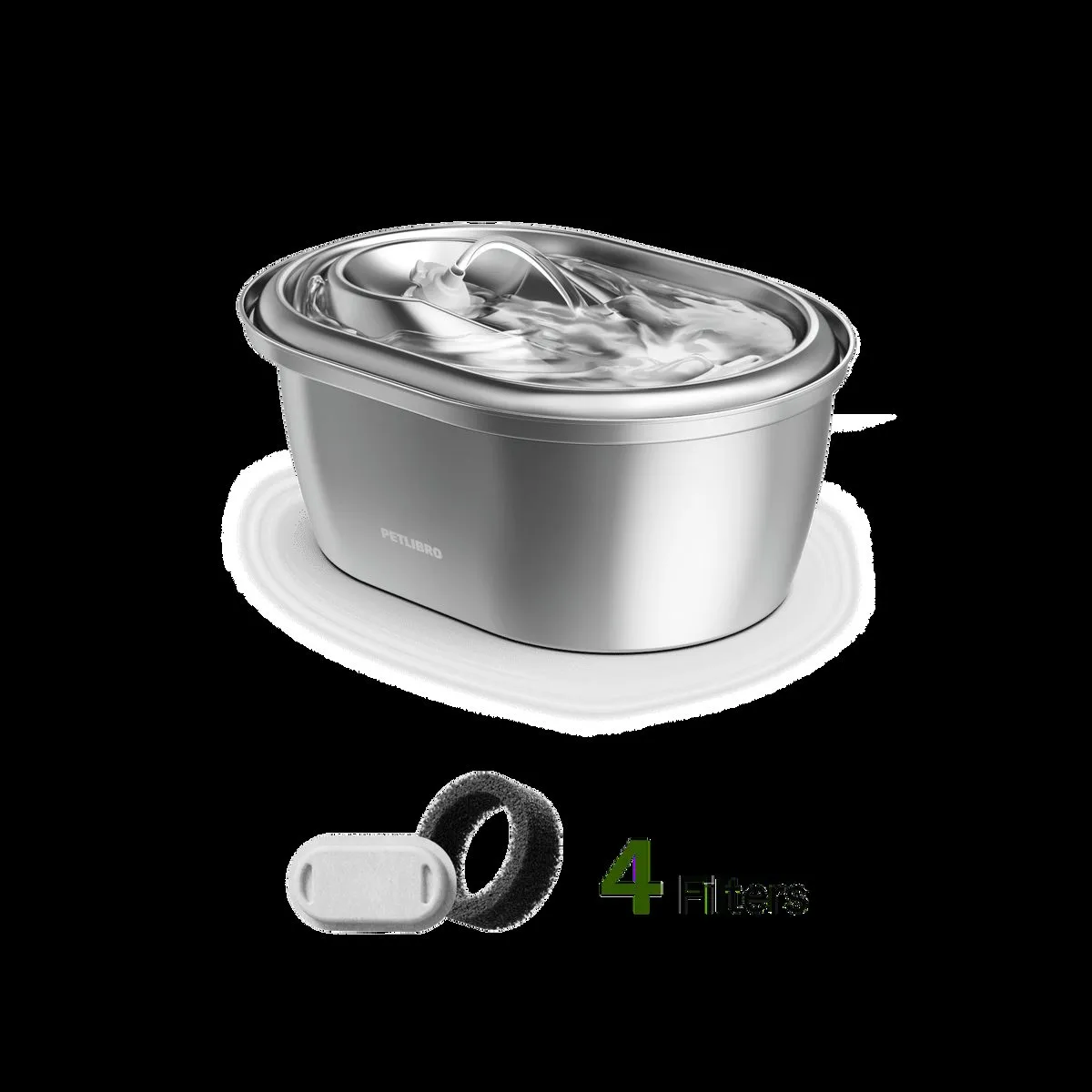
A Pet Fountain Sliced My Finger: 4 Hidden Safety Hazards
The short answer: smart pet devices can physically hurt you and your cat. In 2026, a stainless steel pet fountain sliced an owner’s finger deep enough for five stitches, a second owner spent hours in the ER after a steel piece popped off the same fountain during cleaning, and a $1,000 Litter-Robot 5 Pro kept rotating while a cat was still inside it. These are not software gripes. They are physical-safety failures in products sold for $60 to $1,000. Before you buy, run the four checks at the end of this article.
I spent an evening reading owner reports from July and August 2026, on Reddit and in the comments under Chinese pet-tech videos, looking for one thing: smart pet devices that hurt people or pets. Not devices that annoy. Devices that injure. The pattern surprised me. The failures cluster into four distinct hazards, and none of them show up in a spec sheet: sharp edges on “premium” metal, moving parts that ignore the animal inside, unsealed electronics that corrode from the inside, and brittle plastic that sheds shards.
None of these owners were careless. They were cleaning a fountain, watching a cat use the litter box, or running the device as designed. That is what makes this category different from the usual “it stopped working” complaints. The hardware itself became the hazard.
Why did a pet fountain slice an owner’s finger open?
The short answer: an exposed stainless steel edge on a PETLIBRO fountain cut one owner’s finger deep enough for five stitches and sent a second owner to the ER. The company added an in-app warning only after the second report.
Two separate incidents, same product line, same cleaning routine. The first, posted to r/Petlibro on August 18, 2026:
They just added a warning in the app about this. I cut my finger pretty deep on this a few weeks ago and needed 5 stitches. Tbh I don’t remove that plastic gasket when I clean it. Not a fan of exposed sharp metal.
The second owner describes the mechanism, from a report surfaced in August 2026:
I pushed down on it and it popped off and the stainless steel sliced my thumb enough that I just spent many hours in the ER getting patched up.
Read those two together. The part “pops off” under normal cleaning pressure, and the exposed edge is sharp enough to send an adult to the ER. The fix from the manufacturer was not a redesign. It was an in-app warning, added after the injuries.
The lesson for buyers: “stainless steel” is a marketing word, not a safety rating. Stainless is hard and holds an edge; a stamped stainless rim can be genuinely razor-like. Before buying any metal fountain, look at close-up photos of the cleaning path: the rims, the pump cover, the gasket area. If the edge looks squared off rather than rolled or rounded, that is the part that will find your finger at 7 a.m. with soapy hands.
Can a litter robot keep spinning while a cat is inside?
The short answer: it should never, but a Litter-Robot 5 Pro paused only briefly and resumed rotating while the cat was inside and actively using it. Support first blamed the cat, saying it might need “additional training.”
This one is the worst of the four, because the victim is the cat. The incident, posted to r/litterrobot in July 2026 with 30 upvotes:
My cat entered the robot while it was doing the return cycle. The globe paused for a few seconds, but then it started rotating again while she was still inside and actively using it. She got really scared and nervous.
The owner’s conclusion is exactly right:
The globe moving while my cat is inside is not a minor bug. That is a safety issue.
What makes it worse is the support response. The owner was told sensors would detect the cat and reset the cycle; when that claim fell apart, support suggested the issue “may be related to my cat’s behavior” and that she might need “additional training.” A $1,000 machine that rotates with a cat inside, and the answer is to train the cat.
This is the same product line that owners have described as “still in the beta stage” (57 upvotes), with a camera announced eight months ago that still has not shipped, and a WasteID system that mistakes urine for feces and triggers premature cycles. That is how the cat in that incident ended up inside a rotating globe in the first place. The safety failure and the sensor failure are the same failure.
The check for buyers: ask how the robot decides a cat is inside. Is there a weight sensor plus an anti-cycling rule, or just one sensor? What happens when sensors disagree? And read what support says in incident threads. The tone of the response tells you how seriously the company takes the safety case.
The flip side of sensor reliability is worth saying plainly, because it is the same hardware that saves lives when it works. A July 2026 post with 731 upvotes described an LR4 owner getting a notification that the unit was cycling unusually often. They took the cat to the veterinarian the next day; the day after, the cat had emergency surgery to remove two large bladder stones, and the veterinarian said the notification had saved its life. Same company, same sensor category: lifesaving when calibrated, dangerous when not. That is why the checks above are not cosmetic. Sensor redundancy is the difference between a device that watches your cat and one that spins on it.
What happens when urine reaches the motor?
The short answer: it corrodes the electronics for a year without you knowing. One Litter-Robot 4 owner found urine had leaked through all the mechanical parts and corroded the motor, with exposed wiring; another’s LR4 would not power on after a light cleaning.
A $700 machine with unsealed electronics. The report, posted to r/extremelyinfuriating in 2026 after the original was removed from the Litter Robot subreddit:
There was pee all at the bottom of the floor that I didn’t even know about where it was leaking for a year through all the mechanical bits and corroding everything… the first time I cleaned the motor it was corroded… The globe barely moves and gets stuck.
A year of silent leakage. The owner only discovered it by finding urine on the floor. By then the motor was corroded, the globe barely moved, and the wiring was exposed. An electrical hazard sitting under the cat.
The second report, from August 17, 2026, shows how fragile the wet zones are:
I lightly cleaned the interior lining of my litter robot 4 last weekend, and when I plugged it back in, it wouldn’t power on… I literally just lightly sprayed the liner close up a few times, and the thing won’t power back on.
Lightly sprayed. Dead. For a device whose entire job is to handle urine, the liquid-handling design is the safety-critical part, and it is the part nobody can see in a product photo.
The check for buyers: ask whether the motor and circuit board are sealed against liquid, and how the waste chamber drains. A robot with a sealed electronics compartment and a drainable base handles the actual job. One where a light spray kills the unit is a corrosion timer, not a machine.
Why did a plastic cylinder shatter after 56 days?
FAQ
Can a pet water fountain actually cut you? Yes. Two owners reported deep lacerations from a PETLIBRO stainless steel fountain in 2026: one needed five stitches on a finger, another spent hours in the ER after a stainless steel piece popped off during cleaning. Both incidents happened during routine disassembly. The fountain maker added an in-app warning only after the reports. Check for rolled or rounded edges on any metal part you touch while cleaning.
Is it safe when my cat is inside the litter robot during a cycle? It should not cycle at all, and most robots pause when weight is detected. In a documented July 2026 incident, a Litter-Robot 5 Pro paused for a few seconds during its return cycle, then resumed rotating while the cat was still inside and actively using it. The owner called it a safety issue, not a minor bug. Look for robots with redundant sensors and a documented anti-cycling rule when a cat is inside.
Why do smart fountains and litter robots corrode from the inside? Urine and water reach the electronics through unsealed gaps. One Litter-Robot 4 owner found urine had leaked into the base for about a year, corroding the motor and leaving exposed wiring; another’s LR4 stopped powering on after a light cleaning of the liner. Ask whether the motor and circuit board are sealed against liquid, and check how easy the wet zones are to access and dry.
Are plastic parts in smart pet devices a safety concern? They can be. A PETKIT Purobot Max Pro litter robot’s plastic cylinder cracked and shed two large shards after 56 days of normal use, and the owner warned the fragments could hurt pets or people nearby. PETKIT replaced it under warranty without argument, but brittle plastic near moving parts is worth checking in any device you buy.
Which smart pet devices avoid these hazards? For fountains, the PETKIT Eversweet 3 Pro uses a single-piece SUS304 stainless steel body with rounded edges, a submersible pump, and no exposed metal seams in the cleaning path. For litter robots, the PETKIT Purobot Max Pro 2 has a more mature sensor suite and PETKIT’s 2-year warranty. In both cases read cleaning instructions before buying and confirm the brand does not delete negative reviews.
The short answer: a PETKIT Purobot Max Pro’s plastic cylinder cracked and shed two large shards during normal use, which the owner warned could hurt pets or people. The replacement, to its credit, was handled cleanly under warranty.
The fourth hazard is the quiet one: brittle plastic near moving parts. From r/PETKIT, December 2025:
My Purobot Max Pro’s plastic cylinder shattered after 56 days of normal use. Cracks emanated from the circular joints… two large plastic shards broke off during normal use… can be dangerous for nearby people or pets.
Two large shards, in a machine that spins near your cat. The owner’s own words: dangerous for nearby people or pets. The follow-up matters too, because it shows the split personality of this category:
PETKIT customer service was extremely helpful! They thanked me for the detailed information. They confirmed quickly that the cracked cylinder was indeed covered under their 1-year warranty.
So the same brand that replaced a cracked cylinder without argument also shipped a cylinder that cracked in 56 days. The warranty is the safety net; it is not the safety. A shard in the eye does not care how fast the replacement arrives.
The check for buyers: look at the material of any rotating or load-bearing part. Molded plastic that flexes under stress is one thing; hard, brittle plastic with visible seam lines is another. And read the warranty terms before buying, not after. One year of coverage means the 14th month is on you.
The four hazards at a glance
The 4-point pre-purchase safety checklist
This is the list I wish every owner had before buying. It takes five minutes and it catches all four hazards above.
| # | Check | What to look for | Catches |
|---|---|---|---|
| 1 | Metal edges in the cleaning path | Rolled or rounded rims; no squared-off stamped edges on parts you touch while cleaning | Fountain lacerations |
| 2 | Anti-cycling rule with a cat inside | Redundant sensors (weight + motion) and a documented rule that the globe never rotates with weight inside | Rotating-globe incidents |
| 3 | Sealed electronics in wet zones | Motor and circuit board sealed against liquid; drainable waste chamber; cleaning instructions that don’t involve spraying electronics | Corrosion, dead units |
| 4 | Material of moving parts | Flexible, impact-rated plastic, not brittle seams; warranty term long enough to matter | Shattered parts, shards |
One more check that costs nothing: does the brand delete negative reviews? A company that removes criticism of its own site (documented for PETKIT in 2024, ticket #124852, and for the Litter Robot subreddit in 2026) is telling you how much you will learn after the warranty ends. Read the third-party forums, not the product page.
What to buy instead
If you are fountain-shopping, the PETKIT Eversweet 3 Pro is the safer pick: a one-piece SUS304 stainless steel body with rounded edges, a submersible pump you can replace, and no exposed metal seam in the cleaning path. It has held up for owners for close to two years in our review coverage, and PETKIT’s customer service has a documented record of shipping replacement parts without argument.
If you are litter-robot-shopping, the PETKIT Purobot Max Pro 2 is the recommendation that matches our position register for this category: a more mature sensor suite than the 5 Pro, a 2-year warranty, and a support team that replaced a cracked cylinder without a fight. One honest caveat: some cats refuse automatic boxes entirely and some owners report litter-type compatibility limits, so buy from a place with a real return window and keep the box if your cat disagrees.
The hardware is getting better. The sharp edges, the unsealed motors, the spinning globe. Every one of them is fixable in the next revision. Until then, the checklist above is the only safety manual these products ship with, so print it, use it, and buy like the manufacturer is not watching out for you. Because the owners who posted those incidents found out that it is not.