Pet AI Health Alerts: 8 Vet Trips for Nothing
The short answer: pet AI health alerts fail often enough that one owner spent two months and eight vet visits confirming her healthy cat was fine. The near-$1,000 litter box that started it weighed the same cat 0.5 kg apart in 30 minutes. Health tracking is the most oversold feature in pet tech right now, and you can verify every claim in this article against owner threads and a Chinese consumer investigation from August 2026.
I spent a morning reading what owners and investigators actually found, and the pattern holds across brands and continents. A Chinese consumer report published August 24, 2026 on the shopping-review site SMZDM documented a smart litter box that flagged false alarms so persistently that its owner took her cat to the vet eight times in two months. Every visit came back normal. The same report watched one box weigh the same cat twice in half an hour and get 0.5 kg (about 1.1 lb) of difference. The product’s core promise, monitoring your cat’s health, fails at its one job.
What does pet AI health monitoring actually promise?
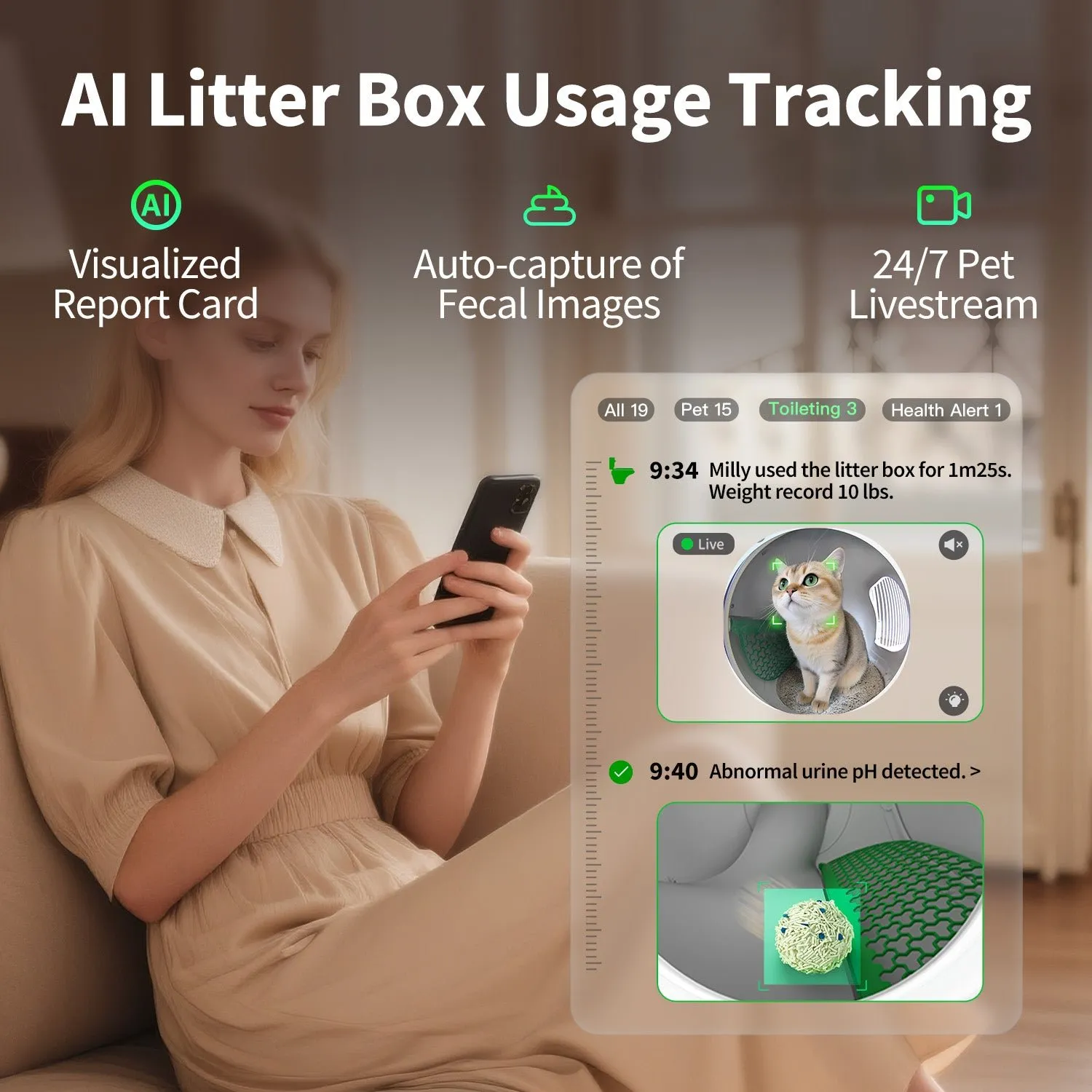
The pitch goes like this: the box weighs your cat every time it uses the litter, counts toilet visits, tracks drinking, and spots problems early. The camera version adds stool analysis. Brands sell these features as the reason a near-$1,000 box costs triple a basic one.
The August 2026 SMZDM investigation (a Chinese consumer site) pulled the curtain back on two of these promises. First, the AI module is not where the cost goes, mechanics, odor control, and the waste drawer eat the budget. Second, stool analysis is physically impractical in most designs: the cat covers the waste with litter before the camera gets a usable frame. The marketing video shows a clean tray. Real cats do not cooperate.
The scale that cannot decide what your cat weighs
Weight tracking is the most quoted AI health feature, and it is the one with the most documented failures. The Reddit evidence clusters around hardware, not software.
One Litter-Robot owner posted that a weight sensor “broke off”, the plastic housing itself snapped, not just the mount. Another titled a thread “Weights wildly off” with no fix in sight. A two-year-old LR4 that had already had its motor replaced at year one and its globe replaced this year still could not tell apart two cats that differed by at least four pounds. A third owner with a hopper installed reported the app saying litter level was “optimal” while the hopper refused to dispense and the tray sat below the fill line.
The PETKIT side matches. A Pura Max Pro 2 owner watched one cat use the box and get recorded, then saw the second cat use it minutes later, and the app logged nothing. One recorded visit, one silent miss, two cats. If the box cannot count visits reliably, the “trends” built on those counts are fiction.
The fountain that counts refills as drinks
Drink tracking fails the same way. A Petlibro Dockstream owner refilled the fountain and the app logged it as the cat drinking 38 ml. The “smart” fountain cannot tell a pour from a sip. Another owner cleaned two Dockstream fountains, reassembled them, and both failed calibration, in 115-degree heat, with three indoor cats relying on them.
This matters more than it sounds. Owners who trust these numbers make decisions on them. A dog owner’s Tractive health monitor showed “normal” while his dog was having a seizure, a documented 1-star case from the brand’s review pool. False negatives hide real problems. False positives manufacture fake ones.
When the alerts are real: the case for keeping the feature
The honest counter-example exists. Litter-Robot owners have posted that notifications caught real issues; one caught a urinary problem he said he would not have spotted otherwise. The feature is not worthless. The problem is calibration: the same brands that produce the genuine catches also produce the eight-trip-to-the-vet false alarms. (The paywall side of that health data is a separate trap; petiqlab documented it in the health data subscription audit.)
If you cannot tell a real alert from a false one, what is the dashboard actually worth? The hardware is real; the confidence it sells you is the product.
That asymmetry is the whole story. A health alert system with a useful signal but terrible precision shifts the cost onto you. You either ignore alerts and risk missing the real one, or you chase every alert and pay for the false ones. Both outcomes are worse than a device that does not pretend to diagnose at all.
What does a false alarm actually cost?
Vet visits are the visible cost, and they are not the only one. The SMZDM report tracked an owner who made eight trips in two months, every result normal. At a typical US exam fee of $50 to $90 per visit, that is $400 to $720 of confirmed-nothing. Add the boarding fees, the missed work, and the anxiety, and one unreliable alert system can cost more than the box itself. How many false alarms does it take before the savings from “early detection” turn into a net loss?
The quiet cost is trust decay. Owners who have been burned stop reading the app entirely, which is exactly when a real alert matters most. The documented counter-example exists: a Litter-Robot owner credited the app’s notifications with catching a urinary problem, and another said weight-trend alerts flagged a cancer diagnosis early. But those same owners live with the false alarms too. Did the system help? Yes, and it also wastes their time weekly. How do you keep trusting a dashboard that cries wolf eight times between the real catches?
There is a third cost that nobody puts on the box: the missed signal. A Tractive dog owner watched his dog seize at 5 a.m., then checked the app to see if it had flagged anything. It showed heart rate and respiration as normal. “They absolutely were not,” he wrote. False negatives are worse than false positives, because they arrive with confidence.
How do I test health tracking before I trust it?
Run these five checks with any device that claims AI health monitoring:
- Search the model, not the brand. Type the exact model name plus “weigh” or “not recording” or “false alarm” into Reddit. Owners name the models that fail. Brand-level reviews will not tell you.
- Ask what the sensor physically measures. A camera pointed at a litter tray cannot photograph buried waste. A fountain sensor that counts motion cannot distinguish a refill from a drink.
- Weigh the cat yourself on day one. Kitchen scale, same time daily, first thing. Compare it to the app for a week. If the app drifts more than 0.1 kg, the trend line is noise.
- Test the failure mode. What happens to the data when the WiFi drops? When the server goes down? Whisker moved health history behind Whisker+ through an app update, and owners documented losing access to records they had already generated (the same pattern petiqlab mapped in the subscription trap audit).
- Check the consumables trap. Some brands lock the device to their own litter or filters. If the company dies, a Chinese budget brand that entered liquidation in 2026 left owners with machines nobody repairs, and your near-$1,000 box becomes a near-$1,000 paperweight. The same ownership math applies across categories, as petiqlab covered in the cloud-free pet tech guide.
What should you buy instead?
If the AI health layer is unreliable, spend on the parts that actually work. petiqlab’s September 2026 picks, all verified against owner feedback:
- PetSafe Smart Feed (B07NR47N2Q) dispenses on a schedule stored on the device, runs with no cloud, no subscription, no health claims to fail. The most dependable feeder for a single cat.
- SureFeed microchip feeder (B00O0UIPTY) opens only for the registered cat’s microchip. No app, no network, no AI. The right answer for multi-cat households that need per-cat portions, and the full comparison lives in the microchip feeder guide.
- PETKIT Eversweet 3 Pro (B09QRH6L3M) is a stainless steel fountain with a replaceable $20 pump. It does not count drinks; it just keeps water flowing, and you can fix it when it wears out.
- TP-Link Tapo C210 (B095CLQ1PT) records to a microSD card with no account and no subscription. If you want eyes on your cat, a $35 camera that stores locally beats a near-$1,000 box that guesses.
A plain rule covers all four: buy the device that does one mechanical job well, and do the health watching yourself. Your eyes, a kitchen scale, and a once-a-week look at the litter tray beat any AI dashboard, and they cost nothing.
FAQ
Can smart pet devices actually monitor my cat’s health? The sensors exist, but the data quality does not hold up in owner reports. A Chinese consumer investigation documented a near-$1,000 smart litter box that weighed the same cat 0.5 kg apart in 30 minutes and sent its owner to the vet eight times in two months over false alarms. Reddit owners report a Petlibro fountain counting a water refill as 38 ml of drinking, a PETKIT box missing a toilet visit minutes after recording another one, and Litter-Robot scales reporting weights wildly off. The pattern across brands: marketing builds the AI story, hardware delivers the guesswork.
Why do pet AI health alerts give false readings? Three mechanical reasons. Weight sensors sit in plastic housings that flex and break; one Litter-Robot owner’s sensor snapped off with the housing, and a two-year-old LR4 still could not tell apart two cats four pounds different after a motor and globe replacement. Activity sensors trigger on motion, so a refill, a tail swipe, or a second cat walking by registers as events. And stool-analysis cameras physically cannot see waste in most designs, because the cat buries it in litter before the camera has a clear frame.
Should I trust the AI health data from my litter box or fountain? Treat it as a hint, not a diagnosis. A few documented cases show alerts catching real problems; one Litter-Robot owner caught a urinary issue because of notifications. But the same brands log false alarms often enough that a healthy cat can rack up pointless vet bills. petiqlab’s rule: if the app says something is wrong, verify with your own eyes, check weight with a kitchen scale, watch the cat drink, look at the waste, before you pay for a vet visit.
How do I check if a pet device has accurate health tracking? Four checks before you buy. One: find owner threads about the specific model, not the brand; search the model name plus “weigh” or “not recording”. Two: ask what the sensor measures physically; a camera pointed at a litter tray cannot photograph buried waste. Three: test the scale against a known weight at home on day one and every month after. Four: check whether the data lives on the device or behind a subscription, since Whisker moved health history behind Whisker+ by app update and owners lost years of records.
What should I buy instead of AI health monitoring? Spend on mechanics, not marketing. petiqlab’s September 2026 picks: the PetSafe Smart Feed feeder (B07NR47N2Q) runs on local schedules with no cloud and no health claims; the SureFeed microchip feeder (B00O0UIPTY) opens only for the registered cat with zero network; the PETKIT Eversweet 3 Pro fountain (B09QRH6L3M) has a replaceable $20 pump instead of drink-counting sensors; and the TP-Link Tapo C210 camera (B095CLQ1PT) records to a microSD card. None of them promise to diagnose your cat, and none of them need a subscription to keep working.
Do AI health monitoring features justify a higher price? In the cases petiqlab documented, no. The near-$1,000 smart litter box that sent its owner to the vet eight times cost roughly three times a reliable basic box, and its own tracking data could not be trusted. A 2026 Chinese consumer report found the core cost of smart litter boxes sits in mechanics and odor control, not the AI module, and warned that some brands lock out third-party consumables. You are usually paying a premium for a screen of numbers the hardware cannot back up.
Updated: 2026-09-01. Sources: SMZDM consumer investigation (2026-08-24), r/litterrobot owner threads (2026-08-29 to 08-31), r/PETKIT threads (2026-08-26 to 08-30), r/Petlibro threads (2026-08-27 to 08-31), Whisker+ paywall documentation, petiqlab September 2026 verification.