Pink Slime in Cat Water Fountains Won't Go Away: What Works
The short answer: the pink film in a cat water fountain is a bacterial biofilm, and it keeps coming back because three things feed it: water quality, food dust, and surfaces you cannot scrub. Owners in two September 2026 threads fixed it with four levers, in order: change the water, move the fountain away from the food bowl, clean with a hydrogen-peroxide soak, and if the film survives all three, buy a fountain whose every part comes apart. The two-week cleaning reminder some apps show is a suggestion. Several owners saw new film two days after a full clean.
I spent an evening reading two threads about fountain slime back to back. The first, in r/Petlibro, is a 21-comment complaint thread about a Dockstream 2 fountain that kept turning red. The second, in r/Costco, is a 17-comment Q&A about a different fountain where cleaning takes ten minutes and nobody is angry. Same problem, opposite moods. Read together they stop being two anecdotes and start being a map.
The r/Petlibro owner had replaced one fountain already, for the same reason. Red slime grew so deep in the crevices of her first Petlibro that she could not clean it out. She bought the Dockstream 2. Then:
I have the dockstream 2 one now and it’s 10x worse. After a couple of days if I open the tank, there is bacteria lining the walls and in the water. The filter itself even turns red.
She takes every piece apart weekly. It does not matter. This line explains the frustration:
this fountain is connected to the app and says to clean it every two weeks so it’s crazy how dirty it gets so fast
The r/Costco buyer opened with the sentence every fountain maker should frame: “Most important thing to me is being easy to clean.” A reply laid out the actual workload:
You have to hand wash about 4-5 pieces, replace two filters. The pump has some nooks inside that can grow bacteria, so it probably takes about 10 minutes total
Ten minutes a week is a fair price there. In the r/Petlibro thread, a woman scrubbing on the same schedule watches the tank go pink anyway. The two threads differ in which of the four levers the fountain and its owner happen to be pulling.
Variable 1: does filtered water stop pink slime?
Water is the cheapest lever, and the one most owners pulled first. “Mine quit being like that when i switched to filtered water,” one wrote. Another: “I used to get a little pink after the two weeks… once I switched to filtered, I haven’t seen pink since.” A third ran fridge-filtered water for three years with no film at all. One owner’s cat rejects Brita water, so she buys bottled spring water instead, and that works too.
Then the counterexample. One owner runs reverse-osmosis water, about the purest tap water you can make, and still gets slime. A Pennsylvania water authority’s guide to pink slime in pet dishes explains why the variable is real but not a law. The pink film is usually an airborne bacterium called Serratia marcescens, the same organism that stains shower stalls pink, settling into any damp, nutrient-rich surface. Chlorine normally holds it back. A filter that removes chlorine can give it an easier start.
The honest version: filtered water helps most owners, because it removes the minerals and organics that feed the film, and it can hurt a few, because it removes the chlorine that suppresses it. The test is two weeks with bottled spring water. If the pink stops, your tap was the food supply. If not, keep reading.
Variable 2: does fountain placement matter?
One commenter in that thread had a vet’s advice to share:
Vet recommended I place the bowl further away from the cat food and pink slime hasn’t showed up since. She said the dry food can increase bacteria growth.
Dry food dust lands in the water, and the dust is protein. A fountain parked next to the kibble bowl is a petri dish with a pump. Moving it across the room takes thirty seconds and removes a food source the filter never sees, because the dust never goes through it.
This is also where petiqlab’s mold investigation starts: a filter traps debris and holds it in the water path while it decomposes. A filter changed late is worse than none.
Variable 3: how do you actually remove pink slime?
Owners in the r/Petlibro thread were cleaning correctly and losing. One commenter changed the method and won. His protocol: pull the filter cartridge out and keep only the foam pre-filter at the pump inlet, dump and rinse the tank daily, and once a week soak every part in 3% hydrogen peroxide for ten minutes, then rinse until no bubbles remain. The biofilm stopped coming back.
The physics checks out. Peroxide breaks the film down and decomposes into water and oxygen, which makes it gentler on plastic than bleach. The daily dump-and-rinse removes the debris before it can feed anything. The water authority’s own advice is frequent scrubbing, because the film has to be lifted off. A wipe-down moves it. A soak plus a scrub removes it.
One owner in the same thread runs spring water on a two-week cycle with no film at all, because his other three variables are under control. Clean on what your tank tells you, not what the app tells you.
Variable 4: is the fountain design the problem?
The r/Petlibro owner said it plainly: the slime is “stuck in places I am struggling to clean.” Crevices, molded seams, pump nooks, none of it reachable with a finger or a brush. The r/Costco reply named the same geometry without the anger: “The pump has some nooks inside that can grow bacteria.”
That is a buying decision hiding inside a cleaning problem. petiqlab’s water fountain pump guide found the same pattern: pump housings are the first part to slime in every material except steel, because they are warm, wet, and full of corners. The mold guide’s four traps all reduce to one sentence: every extra groove, valve, or floating piece is another surface for biofilm. A fountain with parts that do not detach cannot be cleaned, only rinsed. A fountain with a sealed pump cannot be repaired, only replaced. The same pattern shows up in an r/cats thread from August 16, 2026, where the owner of a kidney-disease cat cleans every Sunday and swaps filters monthly. The gunk grew anyway.
Fairness note: the Dockstream 2 owner’s problem was real, but several owners in the same thread fixed the identical machine by changing water or placement. The design made the film harder to fight; it did not make the fight unwinnable. What the thread documents, on any model, is the gap between the app’s two-week reminder and the two-day reality owners measured.
| Lever | What owners did | Reported result |
|---|---|---|
| Water | Switched to filtered, fridge-filtered, or bottled spring water | Slime stopped in most cases; one reverse-osmosis owner saw no change |
| Placement | Moved the fountain away from the dry food bowl (vet advice) | Pink film stopped returning |
| Cleaning method | Daily dump-and-rinse, weekly 10-minute soak in 3% hydrogen peroxide, scrub every part | Biofilm stopped coming back |
| Design | Replaced fountains with crevices they could not scrub | Cleaning time dropped to minutes per week; film no longer reappeared between cleans |
Is a plain water bowl better than a fountain?
The r/Petlibro thread ends with a quiet heresy. One owner gave up on fountains entirely and went back to a water bowl, on the math that a weekly full disassembly is more work than a daily bowl wash. Another moved to a two-bucket, pump-free, filter-free design and never looked back. In r/Costco, long-term owners defended their fountains just as firmly, one at the two-year mark, another praising third-party replacement filters that cut the consumable cost. The 229-upvote thread on r/CatAdvice shows the buyer’s side: its opening line is “I don’t want to buy one and then she doesn’t use it.” The fountain only earns its place if the cat actually drinks from it.
Nobody in either thread is wrong. Cats drink more from moving water, which is why the category exists. But the moment a fountain becomes a weekly science project, it has stopped earning its place on the counter. The bowl is the control group, and it never grows pink slime.
The fountain owners stop fighting
The fountains that survive this war share three traits: stainless steel or ceramic, few parts, every wet part detachable and hand-scrubbable. The mold guide reached the same conclusion from the other direction. Two investigations arriving at one answer is how you know it is real.
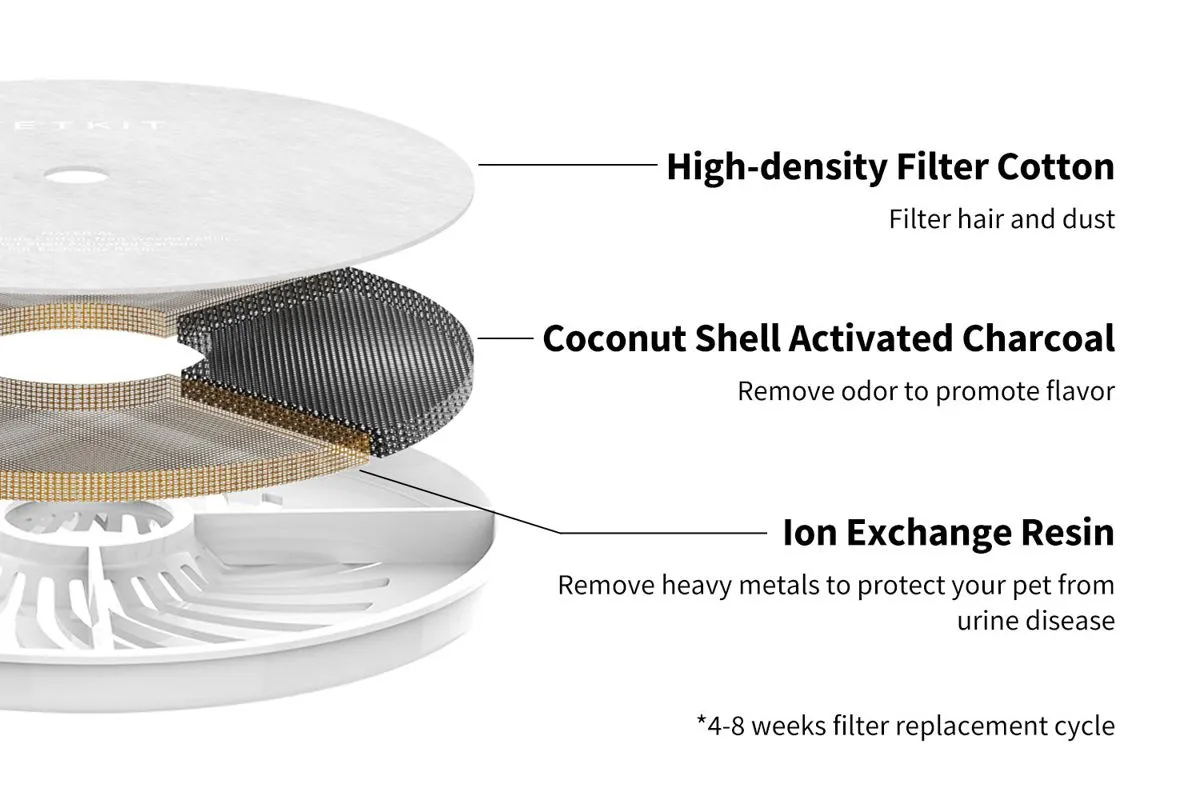
The PETKIT Eversweet 3 Pro fits the pattern. The basin is 304 stainless, so there is no porous plastic for bacteria to colonize in the first place. The pump is wireless and lifts off the base, no pump nooks to attack with a cotton swab. The filter is a four-stage stack you replace monthly, and when the pump finally wears out, the replacement is a spare part you can buy for about $16 (B0B2DM5Q7N on Amazon) rather than a warranty claim you have to win, which is the difference petiqlab’s spare-parts audit says decides whether gear dies young. PETKIT lists it at $79.99; it sells around $62.99 on Amazon (B09QRH6L3M), and the full review covers the rest.
Steel is not a force field. The same water and placement rules apply to it, and an Eversweet next to the kibble bowl fed hard tap water will still grow film, just slower and on surfaces you can actually scrub. Nobody sells a fountain that never needs cleaning. The ones worth buying are the ones where cleaning works.
How to pick a fountain you will actually clean: 5 checks
- Can your hand or a brush reach every wet surface? If a part has a molded-in corner you cannot touch, the film lives there.
- How many parts total? Four or five, like the fountain in the r/Costco thread, is a five-minute job. Twelve parts with valves is a Sunday project.
- Is the filter optional, cheap, and quick to swap? A filter you resent buying is a filter you change late, and a late filter feeds the film.
- Is the pump a spare part you can buy? Sealed and proprietary means the whole fountain dies with the pump.
- Is the cleaning guidance honest? An app that says two weeks while the tank films over in two days is a design confession, and the confession tells you how the fountain actually lives.
Run the two-week bottled-water test before you spend money. Pink stops, you just saved the price of a new fountain. It does not, the problem is structural, and this checklist separates the fountain you scrub from the fountain you fight.
FAQ
What is the pink or red slime in a cat water fountain? It is a bacterial biofilm, a film bacteria excrete plus the debris that feeds them. A Pennsylvania water authority that wrote a guide to pink slime in pet dishes identifies the usual cause as an airborne bacterium called Serratia marcescens, with mold and yeast spores joining in damp spots. Fountains make it worse by design: water recirculates past food particles, saliva, and a warm pump all day, so any surface becomes a colony site. The film is not a sign that your water supply is dirty, and it is not your cleaning that is at fault. It is bacteria doing what bacteria do wherever dampness meets nutrients.
Is pink slime in a water fountain dangerous to cats? No owner in the threads we read reported a sick cat, and the water authority notes that pink slime usually only causes illness in people with compromised immune systems. That is not a reason to ignore it. A drinking source with a visible bacterial film fails basic hygiene, and a filter that has turned red is saturated with the same growth. Clean weekly, rinse every part thoroughly, and replace the filter on schedule. If your cat shows any sign of illness and you have been letting a fountain film build up, that is a conversation for a veterinarian, not a forum.
Does filtered or bottled water stop pink slime in a fountain? For many owners, yes, and it is the cheapest fix to test. In a September 2026 thread, one owner wrote that the slime quit when he switched to filtered water; another said she had not seen pink since the switch; a third ran fridge-filtered water for three years with zero film. But it is not a law. One owner ran reverse-osmosis water and still got slime, and a water authority points out that removing chlorine, which normally holds the film back, can give it an easier start. Test it yourself: two weeks on bottled spring water. If the pink stops, your tap water was feeding it. If it does not, the problem lives in the fountain or the placement.
How often should I actually clean a cat water fountain? Weekly full disassembly is the floor for most kitchens, plus a monthly filter swap. The two-week cadence some apps push failed the owners in our September 2026 source thread: one reported bacteria lining the tank walls after a couple of days, while the app still said every two weeks. A daily dump-and-rinse takes one minute and adds real margin. Some setups genuinely run two weeks clean, but they pair spring water with a scrubbable design and placement away from the food bowl. Clean on what your tank tells you, not on what the app tells you.
Does hydrogen peroxide remove pink slime from a fountain? It is the protocol one owner in our September 2026 thread landed on after filters and scrubbing failed. Disassemble everything, soak the parts for 10 minutes in 3% hydrogen peroxide, the drugstore kind, scrub any visible film, and rinse every part until no bubbles remain. He kept only the foam pre-filter at the pump inlet, dumped and rinsed the tank daily, and reported the biofilm stopped returning. Peroxide breaks down into water and oxygen, which makes it gentler on plastic than bleach. Scrubbing matters more than the chemical. Peroxide kills the film; scrubbing lifts it off the surface, and only lifting stops the return.
Which water fountain resists pink slime best? The pattern across owner threads is consistent: stainless steel or ceramic, few parts, every wet part detachable and hand-scrubbable. The PETKIT Eversweet 3 Pro fits it, a 304 stainless basin with a wireless pump that lifts off the base for cleaning, a four-stage filter, and no crevices molded shut. It lists at $79.99 on PETKIT’s own page and sells around $62.99 on Amazon, and the replacement pump is a spare part at about $16. Steel still needs the same water and placement rules. And a plain bowl, washed daily, is the zero-maintenance option that never grows pink slime at all.
Updated: 2026-09-09. Sources: r/Petlibro post 1w787on (Dockstream 2 owner: red biofilm lining the tank and filter within days of cleaning, app recommending a two-week cadence; filtered-water and spring-water reports; reverse-osmosis counterexample; vet’s placement advice; 3% hydrogen peroxide protocol; the owner who quit fountains for a bowl, September 4, 2026, 21 comments), r/Costco post 1w96d8p (buyer asking for easy cleaning; 4-5 pieces and a 10-minute weekly wash called acceptable; two-year owners defending fountains; third-party filters; the “cordless” model whose base still needs plugging in, September 6, 2026, 17 comments), Lehigh County Authority (pink slime in pet water dishes: airborne Serratia marcescens, biofilm mechanics, chlorine and limescale notes, cleaning guidance, July 15, 2022), and the petiqlab articles linked above. Hero image: official PETKIT product-page photo of the Eversweet 3 Pro four-stage filter stack (petkit.com, master product image).