PETLIBRO's Clock Change Dumped 3 Days of Wet Food
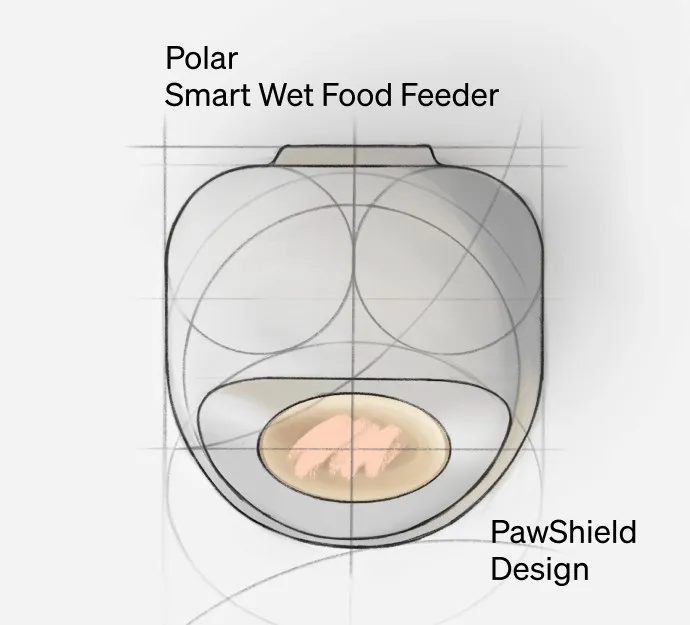
The short answer: the 1 November 2026 clock change did not nudge every PETLIBRO schedule by an hour. On one owner’s account it started a three-day wet food plan a day early and served all three meals at once, about 20.28 oz (600 ml) of food, while the household was away for four nights. PETLIBRO’s public reply in a related thread said a fix for the time zone issue had been deployed, then gave a reset that turns every schedule off, waits 1 to 3 minutes and turns all schedules back on. The Polar sells for $169.99, holds 3 meals and rates wet food fresh for 72 hours. A repair that re-sends the plan from the app is the clearest evidence of where that plan lives.
I read that thread twice on the morning of 2 November 2026, then put PETLIBRO’s daylight saving page next to it on a second screen. The two documents describe different machines. The page describes a feeder that follows the local clock. The thread describes a feeder that followed a plan.
petiqlab earns a commission from the Amazon links on this page. Everything below comes from PETLIBRO’s product and support pages read on 8 November 2026, from owner threads held in this site’s material library, and from a Trustpilot reading taken the same day. Prices are list prices on that date. petiqlab has not run a Polar through a clock change, and nothing here is veterinary advice.
What did the 1 November clock change do to a wet food plan?
Clocks in the United States and Canada went back 60 minutes at 2 a.m. on Sunday 1 November 2026. The United Kingdom and the European Union had already changed on Sunday 25 October 2026. Both dates matter to a feeder whose plan spans several days, because the plan carries a date and not only an hour.
A PETLIBRO owner posted in r/Petlibro on 2 November 2026 with a four-night absence already booked:
“I have two wet food feeders set up with 3 meals each while I am away for 4 nights. The first feeder was set for nights 1-3, the second I set for 4-6 (only needed night 4 but filled all 3 meals). As soon as the DLS transition occurred the app freaked out and started the second feeder’s meal plan a day early. Not only that but it finished it immediately instead of running the 3 day course.”
Read that last sentence with the spec in hand. The Polar publishes 3 meals and 6.76 oz (200 ml) per serving. Three servings is 20.28 oz (600 ml) of wet food, which is what the account describes landing in one bowl on one day, with three nights still to go. A cat does not eat 20 oz of pate in a sitting, and a refrigerated compartment that finishes a 72-hour plan in one cycle has nothing left to serve on the nights the owner planned around.
Why would a three-meal plan finish in a single serving?
The PETLIBRO Polar page lists 3 meals, 6.76 oz (200 ml) per serving and 72 hours of freshness, and that combination works out at 20.28 oz (600 ml) for one full load. A full load maps to three days at one refrigerated meal a day, which is exactly how the owner in the thread configured two machines for four nights away. A dry feeder repeats one wall-clock hour every day, so a clock shift moves that hour by 60 minutes and the routine survives. A wet food plan spans named nights in a calendar, and the plan needs a date as well as a time. A shifted offset that lands on the boundary between two plans can move the later plan by a whole day, and a plan whose end date has passed can empty the refrigerated tray in one cycle. PETLIBRO has not published a cause. The brand’s own repair step, which toggles every schedule off and back on to force a resend, points at the plan held outside the feeder.
That reading is an inference from two published facts: the app manages repeat feeding plans and feeding duration, and the fix that restores a correct hour is a re-send of the schedules. PETLIBRO describes the device as following the local clock and does not describe the plan as a set of dates, so nobody outside the company can confirm the mechanism. What a buyer can confirm is the shape of the failure: an hour becomes a day, and a day becomes a full tray.
How does an hour of clock change reach a feeder that lives where the clocks did not move?
Alberta is the test case. An owner posting on 1 November 2026 wrote that the province dropped the clock change in May and that the feeder shifted anyway:
“Alberta decided in May to no longer shift the clocks (yay). However the Petlibro still shifted DST this morning… it still detects as ‘America/Edmonton’ GMT-7. Insanity that a ‘dumb’ feeder would’ve stayed correct and this smart feeder decides to screw up and shift the clock when it’s not supposed to! (as I type this, I’m getting ‘motion detection’ with a timestamp offset by an hour)”
The machine in that thread is a Granary PLAF203, the camera feeder. The brand’s support account replied on 3 November 2026, and the same paragraph appears four times in the thread:
“We’ve deployed a fix for this time zone adjustment issue. To sync your feeder with the correct local time, please try the following steps: 1. Turn OFF all enabled feeding schedules in the PETLIBRO App. 2. Wait 1–3 minutes. 3. Turn all your feeding schedules back ON…”
A second owner in the same thread, posting while travelling, wrote: “We are out of town & seeing the constant ‘feeding failed’ notifications has us stressed.”
The zone string in the owner’s log explains the rest. The app stores an identifier such as America/Edmonton, and an identifier of that kind carries a rule about clock changes rather than a fixed offset. A province that stops observing daylight saving still reads as the old rule until the identifier or the table behind the identifier changes, and a feeder in Edmonton can therefore shift while a $20 plug-in timer on the same wall does not. The fix arrived two days after the complaint, which is faster than the support timelines this site has documented elsewhere, and the fix is a schedule resend rather than a firmware note.
Why did the app report no Wi-Fi while the light stayed solid?
A second thread, posted 4 November 2026, covers the same week on a different machine and a different symptom:
“With the recent time change my feeder is on the wrong schedule. I went into the app and it says device not on WiFi (even though the light is solid). Happy to remove and re-ad it, but I can’t get the WiFi light to blink or the device to be found. And YES I have unlocked the buttons and YES I’ve held the reset until it says reset successful. But the WiFi light doesn’t change and the device is not found.”
Two status systems disagree in that paragraph. A solid indicator light reports the local radio link. The app reports a cloud session. A cloud session can drop while the radio link holds, which produces a machine that is reachable on the home network and absent from the phone, and a reset that answers “reset successful” on the device while the app still cannot find it. A reply in the thread, from u/poisonpomodoro, predicted the support sequence rather than solving the fault: “My prediction is customer service will make you take videos of you doing these things for days before just ignoring you.”
Balance belongs here, because a week of threads is not a failure rate. A multi-device owner posting on 5 November 2026, with a fountain, a dual dry feeder and two Polar feeders in the house, wrote that the hardware had been fine and that “Support has been super delayed in the last month though.” Hardware and service fail on separate clocks, and this site has covered the service side in its refund and ghosting routes.
What the two threads have in common is more useful than either symptom. The app’s view of the machine is a claim, not a measurement, and the claim is produced by the same service that pushes the schedule. When the schedule is wrong, the app is the last place to look for the truth.
What fix does PETLIBRO actually publish for a wrong clock?
Three procedures, from two documents.
The daylight saving page carries the restart: “Unplug the power cable, remove the batteries (if available) to completely power off the device, reconnect the power cable and reinstall the batteries”, after which “the feeder will resynchronize and future feeding schedules should run at the correct time.” The same page states that “adjusting your phone’s time zone will not update the feeder’s time”, and that a zone change needs a reset plus a fresh connection so the device can detect the new zone at setup.
The 3 November reply carries the schedule toggle: all schedules off, 1 to 3 minutes, all schedules back on.
Read the three together and one thing is missing. None of them audits a plan that has already run, and none mentions wet food plans, multi-day plans or meals already dispensed. A household that has lost a tray of wet food gets a resynchronised clock and no record of what the machine served. The toggle also implies a dependency the page never states: with schedules off, the machine has nothing to run, so a phone, an account and a live connection all sit between the cat and dinner.
The page also uses one careful word. “During daylight saving time (DST) transitions, the feeder will normally update automatically to the new local time.” Normally covers four nights of wet food for one owner in November 2026.
Which Polar numbers depend on the app?
Eight of the nine numbers below are hardware. The ninth is the schedule, and the schedule is what moved.
| What PETLIBRO publishes | Polar PLAF109 |
|---|---|
| Price | $169.99 |
| Meals per load | 3 |
| Serving size | 6.76 oz (200 ml) |
| Freshness rating | 72 hours |
| Chilled to | about 54°F from a 77°F room |
| Cooling pause before serving | about 30 minutes |
| Power outage schedule | 12 hours on the backup battery |
| Warranty | 24 months |
| Schedule control | the app, with repeat plans and meal duration |
The chilling numbers come from PETLIBRO’s own lab description: a 77°F room, food cooled to around 54°F, cooling paused for about 30 minutes before serving so the meal is not ice cold. The 72-hour figure survives a finished plan as well, because the page states that cooling stays active after a feeding plan ends. None of that helps when the plan itself fires on the wrong date.
One more number belongs in the same table, because it is the one a buyer cannot see on a spec sheet. PETLIBRO’s Trustpilot page, read on 8 November 2026, shows 3.2 across 1,117 reviews with “Replied to 77% of negative reviews” and “Typically replies within 2 weeks”. A reply rate counts replies. The thread above shows what a reply can consist of.
What should you check before leaving a cat for four nights?
Five checks, in the order that saves the most food.
- Screenshot the plan one day at a time, not the summary. A summary that reads “3 meals” hides whether those meals sit on 4, 5 and 6 November or on 1, 2 and 3 November.
- Run the plan at home first. Set the same nights and the same meal count a week early, then watch one full cycle. A machine that dumps a tray in front of you costs a can of food and an afternoon.
- Count what left the machine, not what the app logged. Weigh the bowl, count empty refrigerated slots, photograph the tray before and after.
- Keep every plan inside the freshness window. PETLIBRO rates 72 hours, and a four-night trip with one load of three meals sits past that window even when the schedule behaves.
- Plan for the hours the battery cannot cover. The published ceiling is 12 hours of schedule on backup power, and this site has already walked through what a power cut does to a feeder’s battery claim.
Two more checks cost nothing and catch the commoner problem. Confirm the machine’s zone in the app after any move or router swap, because PETLIBRO ties the zone to the network used at first setup. And read the clock behaviour of the model you own before a clock-change weekend, which is the subject of this site’s daylight saving guide for feeders.
What should you buy if the schedule is the part you cannot trust?
For dry food, the PetSafe Smart Feed 2nd Generation publishes a schedule-friendly set of numbers at $134.99: 24 cups of capacity, up to 12 meals a day, portions from 1/8 cup to 4 cups, four D-cell backup batteries sold separately, a 45 day return window and a slow feed setting that spreads a large meal over 15 minutes. It is on Amazon at B07NR47N2Q.
Two disclosures belong beside that link. PetSafe’s clock is set from the time zone chosen at setup and refreshed while the feeder is online, so this machine is not clock-immune. And the PetSafe brand page on Trustpilot sits at 2.1 across 233 unclaimed reviews, which is why the recommendation rests on the published specification and the return window rather than on a brand reputation.
For multi-cat households the simpler pattern is a feeder with no account at all. The SureFeed microchip feeder opens for an implanted chip, which removes the cloud service that pushes a schedule, and this site’s microchip feeder guide covers the trade-offs.
For wet food there is no equivalent. No cloud-free refrigerated feeder was on sale when this page was assembled, and the Polar at $169.99 carries the multi-day plan. A cat that needs wet food during a trip is better served by a dry feeder and a person with a can opener than by a four-night refrigerated plan nobody can audit.
This page carries no buy link for the Polar or the Granary, deliberately. The defects above are documented on a handful of threads rather than measured across a sample, and the hardware numbers in the table are ordinary for the price. The problem worth pricing is the plan.
Sources
- Owner account of the two wet food feeders, r/Petlibro, 2 November 2026
- Owner account from Alberta and the brand’s published fix, r/Petlibro, 1 November 2026
- Owner account of the wrong schedule and the Wi-Fi report, r/Petlibro, 4 November 2026
- Multi-device owner on hardware and support, r/Petlibro, 5 November 2026
- PETLIBRO, Does my Petlibro feeder adjust for Daylight Saving Time?
- PETLIBRO Polar Refrigerated Wet Food Feeder product page
- PETLIBRO on Trustpilot, read 8 November 2026
- PetSafe Smart Feed Automatic Feeder, 2nd Generation
FAQ
Did PETLIBRO feeders fail when the clocks changed on 1 November 2026?
Owners reported three failures around that date. One said a second wet food feeder started a three-meal plan a day early and served all three meals at once during a four-night absence. A second, in Alberta, said a Granary PLAF203 shifted an hour after the province stopped changing clocks, with the app still reading America/Edmonton GMT-7. A third said a Granary kept a wrong schedule and the app reported no Wi-Fi while the light stayed solid. PETLIBRO replied in two of the threads and said on 3 November that a time zone fix had been deployed.
Why would a wet food feeder serve a whole plan at once?
A multi-day wet food plan is keyed to dates, not just to an hour. The Polar holds three meals at 6.76 oz (200 ml) each and rates food fresh for 72 hours, which is one refrigerated meal a day across three days. A dry feeder repeats a wall-clock hour daily and a clock change only nudges that hour by 60 minutes. A plan that spans named nights can be read against the wrong date once the offset moves, and a plan whose end date has passed can dispatch every remaining meal in one cycle.
Does the Polar keep working if the power goes out?
Partly. PETLIBRO states that the feeding schedule continues for 12 hours during a power outage through the backup battery source, so a short cut does not stop a scheduled meal. Twelve hours is the published ceiling, and most overnight trips run longer. The refrigerated compartment also stops cooling without power, and the 72-hour freshness rating describes normal operation rather than an unpowered box. Treat the battery as a bridge, not as cover for a trip.
How do I fix a PETLIBRO feeder that is an hour off after a clock change?
PETLIBRO’s daylight saving page gives one procedure: unplug the power cable, remove the batteries to power the device off completely, then reconnect and reinstall, after which the feeder resynchronises. The page states that changing the phone’s time zone will not move the feeder’s clock. On 3 November 2026 the brand added a second procedure in public: turn every enabled schedule off in the app, wait 1 to 3 minutes, then turn all schedules back on.
Can I change the time zone on a PETLIBRO feeder without a reset?
No. PETLIBRO states that the zone is determined by the network used when the device first connects to the app, that the zone will not follow a later phone change, and that a zone change requires a reset and a fresh connection so the device detects the new zone during setup. A household that moves house, or swaps a router for one broadcasting a different network name, can end up on the old zone until that reset happens.
Is the app’s feeding log proof that a meal was served?
No. On 4 November 2026 a Granary owner reported a wrong schedule and an app that called the device offline while the indicator light stayed solid, which means the cloud session and the local radio link disagreed. A log records what the app believes, and that belief comes from the same service that pushes schedules. Count what left the machine instead: weigh the bowl, count empty refrigerated slots, or watch one full cycle on a short plan.
Which feeder should I buy if I travel often?
For dry food, the PetSafe Smart Feed 2nd Generation at $134.99 publishes 24 cups of capacity, up to 12 meals a day, portions from 1/8 cup to 4 cups, four D-cell backup batteries and a 45 day return window. Its clock still comes from the time zone chosen at setup, so no feeder in this comparison keeps time by itself. For a cat that needs wet food away from home, the safer pattern is a dry feeder plus a person who opens a can.